tvisa-cover_for_web[1]Human trafficking doesn’t often make headlines in the Minnesota legal news, but now and then a case with local connections can arise.  A well-meaning practitioner can easily be at loss for how best to serve the needs of a trafficking victim client outside of conventional legal tools. This is why The Immigrant Legal Resource Center has published a valuable resource book, Representing Survivors of Human Trafficking: A Promising Practices Handbook (ILRC 2010).

Based on their ten years of working with trafficking survivors, authors Ivy Lee and Lynette Parker created this book to assist survivors’ advocates, which include case managers, health care providers, and law enforcement agencies, in addition to attorneys. The result is not a conventional legal treatise per se, but rather a guidebook to serve as a social roadmap of real cases and lessons learned firsthand. As well as an overview of the basics, the book contains tips for identifying a potential victim of human trafficking, answers common questions about trafficking situations, and offers suggestions on how to deal with the practical challenges of a trafficking case. There may be diverse options for relief available to the practitioner and client, as well as the service providers of a trafficking case.

Despite its non-law book layout and its California-slanted perspective, the extensive experience of the authors makes this handbook particularly thoughtful, relevant, and comprehensive. It is available for checkout at the Library.
 

10-7-2013 002

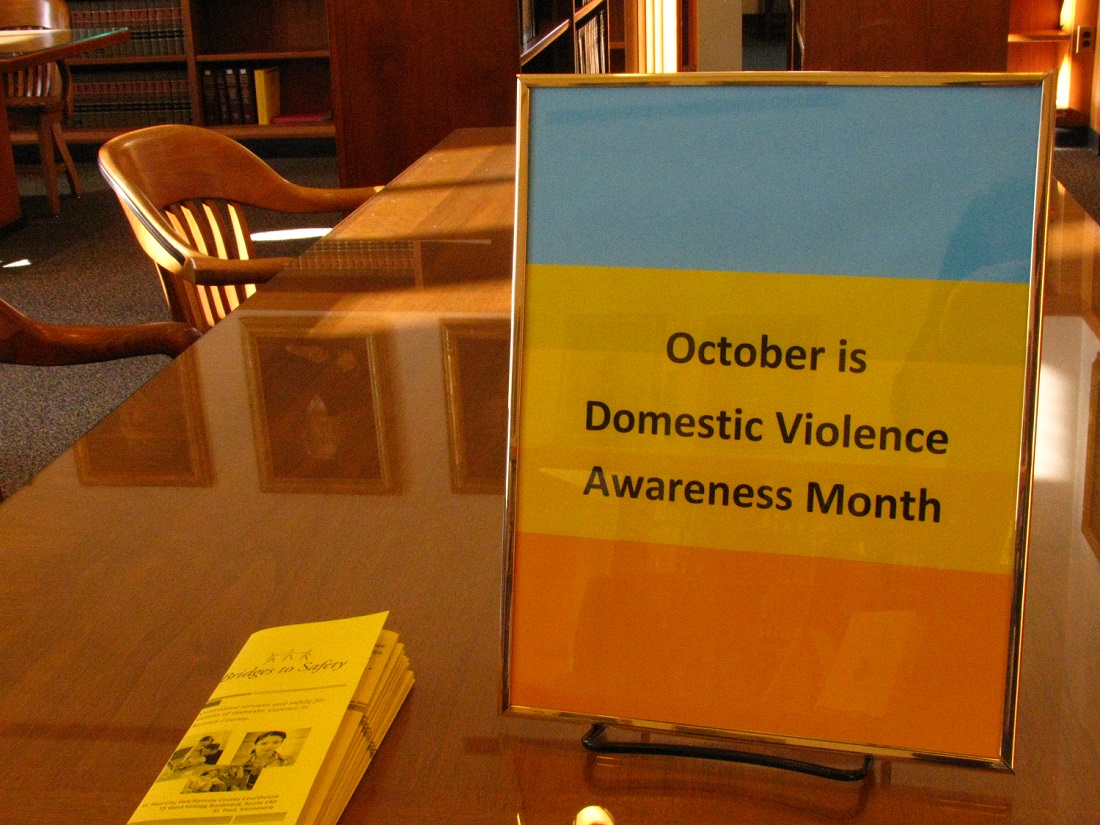
Anyone reading local headlines of late is painfully aware of the recent rash of domestic violence in the news. Coincidentally, October happens to be Domestic Violence Awareness Month. By second coincidence, last week also marked the passing of local activist Monica Erler at age 92. Ms. Erler was known for her 1972 founding of the first women’s shelter in the metro area, and indeed, in the entire nation. Her testimony to the effort of starting and maintaining this shelter through her organization, Women’s Awareness, can be read in Battered Women:  Issues of Public Pollicy, a 1978 report of the United States Commission on Civil Rights(Link unavailable due to government shutdown.)  This report underscores the drastic lack of options a battered woman faced at that time, wherein she really had no constructive alternative to staying with her abuser.

We are fortunate to have Bridges to Safety located in room 140 of the ground floor of the Ramsey County Courthouse. Here, domestic violence victims (regardless of gender) can obtain legal and community assistance, including emergency referral to shelter service and assistance in seeking an Order for Protection. (After hours and weekend assistance can be found through the St. Paul Intervention Project.)

Perhaps almost as difficult as experiencing domestic violence firsthand is watching a friend or loved one struggle with such a difficult situation. Cornerstone is a local organization providing some answers to those “How can I help?” questions, as well as assistance for those seeking to bring heightened awareness of domestic violence to their communities.


Sheriff Matt Bostrom

Sheriff Matt Bostrom

The Law Librarian had the pleasure of attending the Sheriff’s open house event this past weekend. It turns out that the Law Enforcement Center at 425 Grove Street outside of downtown St. Paul sees a level of action seldom matched at the downtown Courthouse.

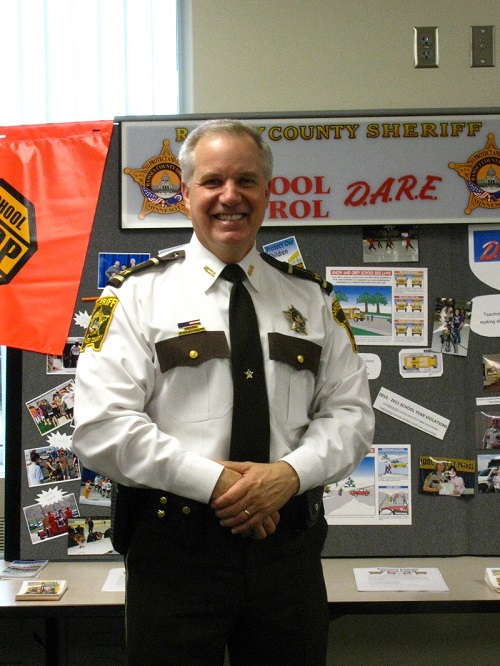
Local arrestees are seen promptly in one of two arraignment courtrooms presided over by a rotation of Second District Court judges. These courtrooms easily rival any downtown courtroom for activity level, for as the tour guide reminded, “People get arrested every day.” Visitors also got to see a typical holding pod for detainees, with two levels of cells looking out on a common area that includes telephones, tables, vending machines, and donated books. Bologna sandwiches, supplemented by vending machine fare, apparently make up the typical detainee diet. (The typical detainee remains at the facility for less than five days, but apparently those who stay longer learn to get creative with these limited options.) Other highlights of the tour included the emergency dispatch center (one of the largest in the Midwest), and the indoor shooting range. The tour concluded with the chance to say hello to Sheriff Matt Bostrom (and take his picture).

Some features and services offered by the Sheriff’s Department include the following:

Community Concerns forum Use this link if you want to make the Department aware of something, like a potential safety issue looming in your neighborhood.

Report a Tip Use this link to submit an online tip, or submit it by text or phone.

Arrest Warrant Search – Here is a searchable database if you need to know if there is a warrant out for someone’s arrest.

Community Alerts – Submit to this service to stay informed of emergencies such as missing persons or predatory offender notifications.

You can also follow the Sheriff’s Department on Facebook.


Illustrated_Guide_to_Criminal_Law_-300x300While not the most scholarly treatise on our shelves, the Library now possesses The Illustrated Guide to Criminal Law (Jones McClure 2012). In this book criminal lawyer Nathaniel Burney explains via illustration Legal concepts such as punishment, rehabilitation, deterrence and retribution. He attacks and destroys the common myths and misunderstandings surrounding criminal law (i.e. the mistaken belief that an undercover cop must reveal being a cop to a suspect or else it is entrapment). The legal layperson reading this book for fun and excitement will actually have a firm grasp of criminal law on completion. (Don’t be too quick to scoff at illustration as a tool for legal communication. Last year an amicus brief was submitted to the U.S. District Court of New York, which was completely executed in comic book format.)

While it won’t replace more conventional treatises on criminal law, this book is a gem with its own unique appeal. It’s not only handy tool for students or laypeople seeking an understanding of criminal law concepts, but an irresistible comic book-style read for legal professionals in need of a superhero fix.

More information about this book can be found at Burney’s website.


Cleary_Edward_-_Preferred_-_resized[1]Former Ramsey County District Judge Edward Cleary will assume the role of Chief Judge of the Minnesota Court of Appeals at the beginning of November. Current Chief Judge Matthew Johnson has announced that he will not seek another term and will conclude his term on this bench at the end of next month.

Edward Cleary has spent his career to date making his legal voice heard. Cleary authored Beyond the Burning Cross (Vintage 1994), telling of his experience as a local practicing lawyer in defending the free speech rights of a cross-burner before the United States Supreme Court, whose actions had violated a St. Paul hate crime ordinance. (This book is available in the Library.) This case, R.A.V. v. City of St. Paul (505 U.S. 377 (1992)), became a subject of in-depth analysis from now-Supreme Court Justice Elena Kagan. After serving as the Director for the Minnesota Office of Lawyers Professional Responsibility, Cleary was appointed to the Ramsey County District Court in 2002. He was a key figure in the 2008 vote recount in the election contest for U.S. Senate between Al Franken and Norm Coleman. After the Wall Street Journal published an editorial attacking the recount’s credibility, Cleary wrote a scathing letter to the editor defending the integrity of Minnesota’s recount process. He was appointed to the Minnesota Court of Appeals in 2009. Earlier this month, Cleary wrote the bold and decisive opinion for the Court in this shocking case earlier this month defending Minnesota’s malicious punishment statute.

Congratulations to soon-to-be Chief Judge Cleary.


In Memoriam – Judge Michael F. Fetsch

20130914__130915Fetsch[1]Last week marked the passing of retired Judge Michael F. Fetsch. He served on the bench of the Ramsey County District Court from 1996 until 2009, when he reached mandatory retirement age. In his extensive legal career he served as a public defender, worked for Legal Assistance of Ramsey County, and was the first Executive Director and Chief Attorney for the Neighborhood Justice Center. He also served on the Board of Directors of the Lawyers Professional Responsibility Board. He was voted one of the most courteous lawyers by Minnesota Lawyer in 1991, as well as one of the “Leading Minnesota Attorneys” for Criminal Law that same year. He was also selected as one of the “100 Who Make A Difference” by William Mitchell College of Law (his alma mater) for their Centennial Celebration Publication. For more on Judge Fetsch, see this MNCourts page, and his obituary.


Judge Portraits – Gone for Restoration

Sept 16 2013 010
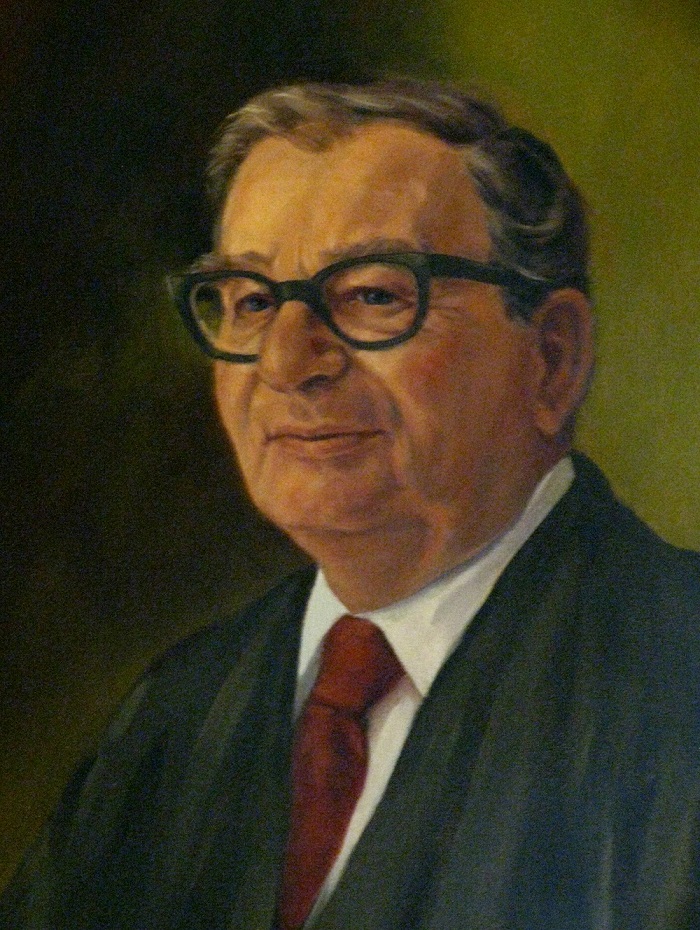
Visitors to the library will notice that ten of our 36 historical portraits are currently “checked out.” They have actually been sent to the Midwest Art Conservation Center in Minneapolis for restoration, and will return in late October. The library received a Legacy Grant to restore a portion of the collection, and these ten were in the heaviest disrepair:

Kenneth Gray Brill
Frederick Dickson
William Louis Kelly
Gustavus Loevinger
Carlton McNally
James Michael
Grier M. Orr
Charles Otis
E.C. Palmer
Howard Wheeler

The portrait collection includes judges who served in the mid-nineteenth century. Many were painted by Minnesota artist Edward Brewer. The judges represent some fascinating aspects of St. Paul and Minnesota legal history.

One of the purposes of the Legacy Amendment’s Art and Cultural Heritage Fund is “to preserve Minnesota’s history.” Appropriations made this year from the Constitutional Amendment passed by voters in 2008 will help preserve history across the state. This will be accomplished through Minnesota Historical Society programs, grants, partnerships and statewide programs. Arts and Cultural Heritage funding for history grants and statewide programs increased compared to the previous biennium. See here for more information on our grant.


Bank Robber Shon Hopwood’s Second Chance

13155188You may have recently read Shon Hopwood’s story in the national news: After spending the late 1990’s robbing banks across rural Nebraska, time and justice finally caught up with Shon Hopwood. At 23, he was facing federal Judge Richard Kopf for sentencing on robbery charges. Hopwood’s appeal to the Judge for leniency was unsuccessful, for he wound up serving over a decade in a federal prison for his crimes.

Prison, however, was where Hopwood discovered the law library, as well as his own knack for legal analysis and application. He was a quick study, soon becoming the in-house go-to guy for various inmate legal needs. Hopwood’s coup was preparing a petition for certiorari to the United States Supreme Court on behalf of fellow prisoner John Fellers. When the Court granted certiorari in a 9-0 against-all-odds decision, it started the chain of events that ultimately lead to Mr. Fellers’ sentence being reduced by four years. Young Mr. Hopwood had clearly found his calling. Released from prison in 2008, Hopwood enrolled in law school at the University of Washington. Now thirty eight years old and the father of two small children, he is currently scheduled to graduate in 2014. He will then serve as a clerk for Judge Janice Rogers Brown of the U.S. Court of Appeals for the D.C. Circuit.

Both NPR and the New York Times have featured recent articles highlighting Mr. Hopwood’s turnaround. Hopwood and his wife Marie have a personal blog here. (Their take on life is a decidedly Christian one.) Now semi-retired, Judge Kopf has evaluated the sentence he imposed on Hopwood in his own blog. (See Hopwood’s own comment entry here as well.) Mr. Hopwood has also written an inspiring memoir of his turnaround: Law Man: My Story of Robbing Banks, Winning Supreme Court Cases, and Finding Redemption (Crown 2012 ). Law Man is here in our library and available for check-out.


Archie Gingold


Archie Gingold was born in 1908 in St. Paul to Lithuanian immigrants, and grew up in the nearby West 7th neighborhood. He attended St. Paul’s Mechanic Arts High School, went on to Macalester College, and ultimately graduated from the original St. Thomas Law School in 1932. (He was the last surviving alumnus of the original law school.) He was admitted to practice law in 1933. At one point he was hospitalized for an appendectomy, during which he was tended to by Nurse Helen Mae Swanson. She and Gingold were married in 1945, following his service in the Army. They had three daughters: Sandra, Carla, and Mimi.

Gingold was appointed to the St. Paul Municipal Court in 1954, and then to the Ramsey County District Court in 1960. He spent the next 18 years serving in juvenile court. He was a stern but benevolent juvenile judge, known for pounding his fist and leaving the youngsters “shivering and shaking” before handing down light sentences. Other times he would remind offenders of the “bus for Red Wing” parked outside the court ready to take them away if they did not mend their ways. Adoption proceedings were his favorite, which he turned into courtroom celebrations featuring cake or cookies. He also changed how the court viewed alcoholics, seeing that they needed treatment for their problems before it was commonly recognized. He was also instrumental in developing temporary homes for children requiring out-of-home placement. He retired from the bench in 1978, but continued to serve the court in various capacities for the next ten years.

Judge Gingold’s contributions to community and justice were recognized by many institutions. St. Thomas University Magazine published an article tribute to him, “Society’s Conscience” (1/07/2001). A special tribute was written of him by current Ramsey County District Judge John Van de North, which can be read here. He was active in organizations including the United Way, the Bethesda Foundation, the St. Paul-Ramsey Mental Health Board, and the Boys and Girls Clubs of St. Paul. He received awards for his efforts from Brandeis University, the Ramsey County Bar Association, Mount Zion Temple, Alcoholics Anonymous, Goodwill Industries, as well as an honorary Ph.D. from the University of St. Thomas Law School.

Archie Gingold died in 2006 at the age of 97.

The Law Librarian discovered abundant information regarding the late Honorable Gingold’s contributions to community and society, but knows that many people have fond personal memories of him. She invites readers to please share them in the comments box, as well as any other information they might have.


Over 180,000 Minnesotans are summoned for jury service every year. Service may be compulsory, but few are actually chosen to this powerful and exclusive club. If you have recently been called up for jury duty in Ramsey County, you are apt to have questions, particularly regarding what you “can-and-can’t do” where your electronic communication habits are concerned. (Example: In a recent trial, a judge required the jurors to provide information to their Twitter accounts.) For answers to some of these questions and other information, see the Courts webpage.

Are you a practitioner planning your voir dire questions for an upcoming jury trial? Consider reading Inside Jurors’ Minds:The Hierarchy of Juror Decision-Making by Carol Anderson (NITA 2012). This book is basically a psychology primer for litigators. Anderson explains how it is impossible for jurors not to apply the same cognitive tools in court that they use for everyday decision-making. So despite any careful instructions presented to them about keeping an open mind and so forth, jurors still bring their lifetimes of mental baggage and preconceptions into the jury box. As human beings they really have no choice. According to Anderson, good litigation strategy depends on recognizing these tendencies that we all possess and making a game plan with them in mind.

For those litigators seeking more news and information pertaining to juries, an interesting blog is available here. (Note: Most of this information is presented with Florida law in mind.) Jurors Behaving Badly is a less formal but still informative blog aimed at jurors, courtesy of Judge Steve Halsey of Minnesota’s 10th Judicial District.