Are You a Peephole Driver?

OLYMPUS DIGITAL CAMERA
As the reality of winter commuting sets in once more across Minnesota, let us be aware of the danger in what has become known as “peephole driving.” As explored by this recent article in the Star Tribune, peephole driving is the operation of your vehicle aided only with only the visibility provided by a small ice-free patch that you’ve managed to scraped onto your winter-frosted windshield. No driver can reasonably be expected to see hazards like cars in adjoining lanes, bicyclists, pedestrians at crosswalks through such a pitiful hole of visibility…yet we have all seen them try.

This area of vehicle safety is covered in Minnesota Statute 169.71 Subd. 3, which states that “[n]o person shall drive any motor vehicle with the windshield or front side windows covered with steam or frost to such an extent as to prevent proper vision.” According to Lt. Eric Roeske of the Minnesota Highway Patrol, a citation for obscured vision can cost upward of $130. Of course, “proper vision” might be a debatable concept, but it becomes crystal-clear in the wake of a fatal accident.


The FATHER Project


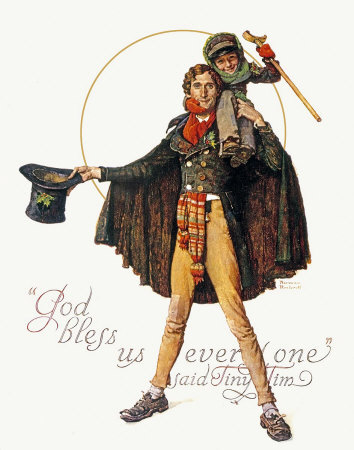
"Tiny Tim and Bob Cratchit" by Norman Rockwell

“Tiny Tim and Bob Cratchit” by Norman Rockwell

This holiday season, let us be inspired by Charles Dickens’ character Bob Cratchit for his demonstration of proactive, hands-on fatherhood. This beloved guy from A Christmas Carole knew he made a difference in his children’s lives, despite having to face down difficult parenting obstacles. (These would certainly include his difficult boss and limited income, not to mention his youngest child’s health problems.) In keeping with the Bob Cratchit example, we are highlighting the work of the FATHER Project, whose “mission is to assist fathers in overcoming the barriers that prevent them from supporting their children economically and emotionally.”

Ramsey County Child Support has partnered with the FATHER Project to support the financial and emotional involvement of fathers. An outgrowth of Goodwill –Easter Seals, the FATHER Project provides parenting and support groups, one-on-one advocacy and case management, GED services, employment services, father and family activities, child support services, and legal workshops through Central Minnesota Legal Services. According to this article published last month in The Star Tribune, the average father in Ramsey County’s Child Support system owes about $16,000. Predictably, some fathers get discouraged by their mounting debt and give up. Similarly, tools used to collect child support have typically been penalty-focused, such as revoking driver’s licenses. Thus, the FATHER Project aims to keep dads encouraged and on track by guiding them through the system and providing them with the right services to support them as parents. The program accepts dads between ages 17 and 35 who are low-income and unemployed or underemployed.

Also see the Father Project on Facebook.


file000264450357[1]The New York Times has reported on the death last week of former paralegal Merrell Williams Jr. Though lacking the star quality of an Erin Brockovich, Mr. Williams is best remembered as the paralegal who smuggled documents from his document review project revealing the health risks and addictive properties of smoking. These documents ultimately lead to the $246 billion settlement in 1998 against the country’s four largest tobacco companies. One could say Williams was the hero from which this and all subsequent tobacco settlements flowed. One could also say that his actions represented the ultimate violation of attorney-client privilege.

Williams became a $9/hr paralegal with Louisville, KY firm Wyatt, Tarrant & Combs in 1988. In this position he was tasked to review documents on behalf of then-cigarette manufacturer Brown & Williamson for their product liability defense. Now, Williams’ ultimate deed was not a single accidental “oops” committed by some poor stressed and overworked document reviewer… His activities took place over years, and involved smuggling thousands of pages of documents out of the office beneath a rubber corset and taking them to various late-night copy shops before returning them to the firm the next morning. Both before and after the firm discharged him in 1992, Williams sought to interest law enforcement and tobacco industry opponents in his huge copy stash (which ultimately wound up in the hands of the Mississippi Attorney General and the centerpiece of tobacco litigation). Mr. Williams also apparently accepted gifts and a “job” (attendance optional) from the lead lawyer against the tobacco industry. He may have been rather susceptible to monetary rewards, considering as he held a Ph.D. in theater arts, was in the middle of his third divorce, behind in his child support, and had declared bankruptcy four times. Williams himself had been a longtime smoker of Kool cigarettes, but supposedly quit as a result of reading the “smoking documents” (pun intended). However you see choose to see him, Williams’ actions were instrumental in how our society has come to view the tobacco industry, and smoking in general. Read more about Mr. Williams’ eye-popping story here and here.


Civil Society

Linda Miller - Founder of Civil Society

Linda Miller – Founder of Civil Society

Perhaps times have changed since the Pilgrims arrived in this country. Nowadays there is no guarantee that new immigrants to our country will necessarily encounter benevolent locals upon their arrival. Unfortunately, immigrants as a group may be vulnerable to the dangers of human trafficking. This inhumane practice finds its victims in all walks of life, but the isolated and disconnected are more vulnerable. Additionally, immigrants are often unaware of resources available to protect them, and may also hesitate to ask for help for fear of deportation.  Of additional significance, the FBI recently listed Minnesota among the top 13 states for human trafficking of minors.

Civil Society is dedicated to connecting the victims of human trafficking to needed services, legal and otherwise. They provide legal services for victims of human trafficking and sexual assault, court advocacy, assistance with applications to the Crime Victims Reparations Board, as well as assistance with applications for Orders for Protection (OFP) & Harassment Restraining Orders (HRO). Civil Society is also the Coalition Leader for MN Rescue and Restore Victims of Human Trafficking. Their Equal Justice Legal Clinics also provide legal advice on matters including hate crimes, safety, crime victim reparations, VAWA self petitions, U-visas, T-visas, violence in the home, exploitation, problems with fraud, identity theft and crime related problems. Click here for more information. Also check out www.immigrationlawhelp.org for immigration-specific legal resources. A list of local agencies is also available here.


file7411252893790[2]St. Thomas – $36,483
Hamline – $36,970
William Mitchell – $37,330
U of Minnesota (resident) – $40,058
U of Minnesota (nonresident) – $47,330

The Law Librarian would like to approach the subject of student loans, precisely because her jaw hit the floor when she saw the above numbers. They are from the October 31 issue of Minnesota Lawyer, with its front page article telling how the University of St. Thomas (UST) has implemented a tuition freeze for the next two years. UST Dean Robert Vischler acknowledges that the price is still steep, but hopes that a freeze might attract quality students to UST that might otherwise go to a different law school.

Student loans are the modern albatross of our time, and not just for young graduates. This is mostly because tuition prices are significantly higher than they were back in 1978 (when bankruptcy laws were changed to make student loans non-dischargeable), and because landing a job is such a hit-and-miss prospect in today’s economy. And unless you come from a family of means, student loans are typically how you fund today’s education. If you managed to put yourself through school years back with a part-time job and no loans, congratulations to you. However, the Law Librarian is confident that no matter how you might have done it then, a typical student cannot be expected to come up with $36,000+/year working summers/evenings/weekends. To all of you who graduated from law school 10-plus years ago and are smugly patting yourselves on the back for having paid back your loans, be certain that you never saw anything like today’s tuition prices. And don’t say it’s not your problem. Today’s young graduates are curtailing their plans for such rites of passage as  home ownership and children. Do you benefit from an economy that depends on a robust housing market? Do you benefit from an economy that depends on the next robust generation of future taxpayers to fund Medicare and Social Security and all the rest? Then this IS your problem. It belongs to all of us.

To this problem, the Law Librarian offers no simple solution. But borrowers might take a look at the downloadable 60+ Ways to Get Rid Of Your Student Loans (Without Paying Them). Here is also a page of webinars about loan forgiveness.

 
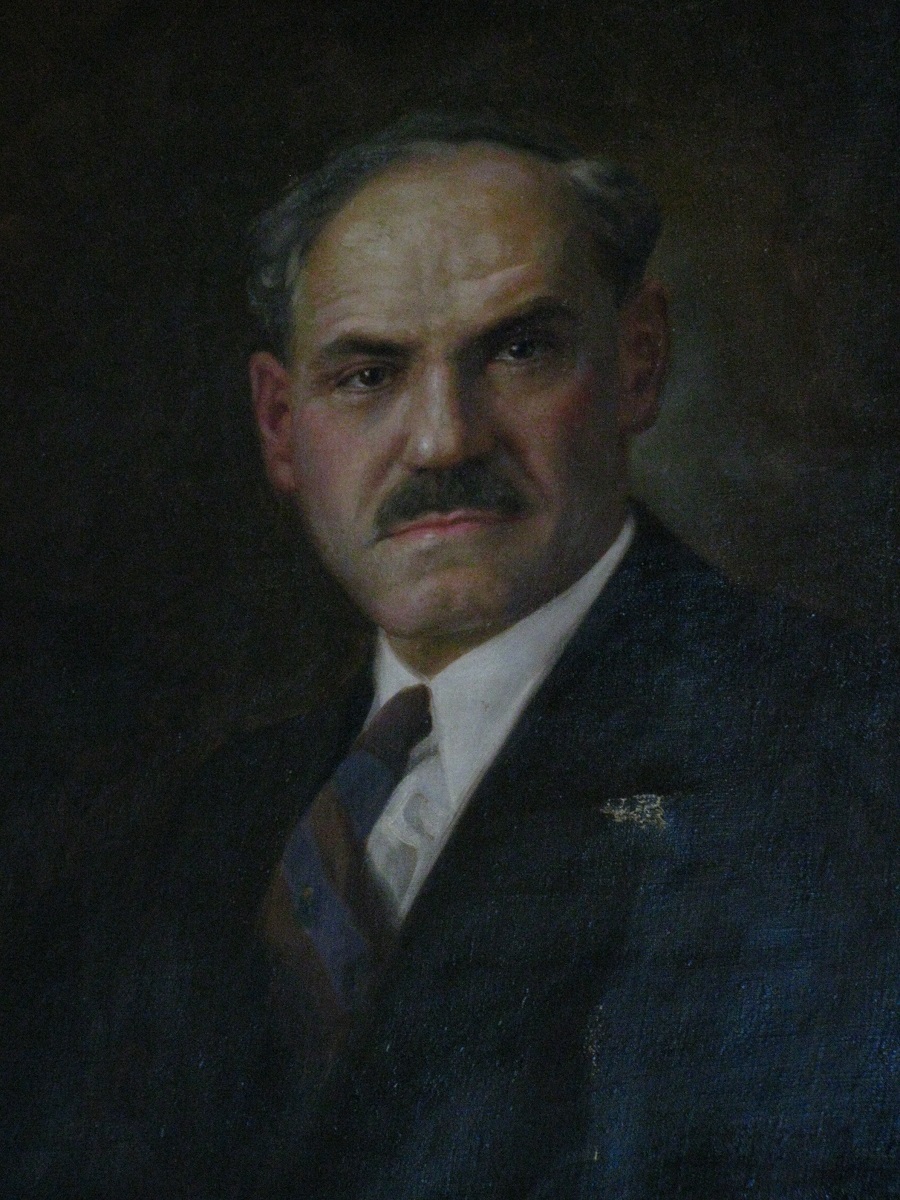
Loevinger (before)

Loevinger (before)

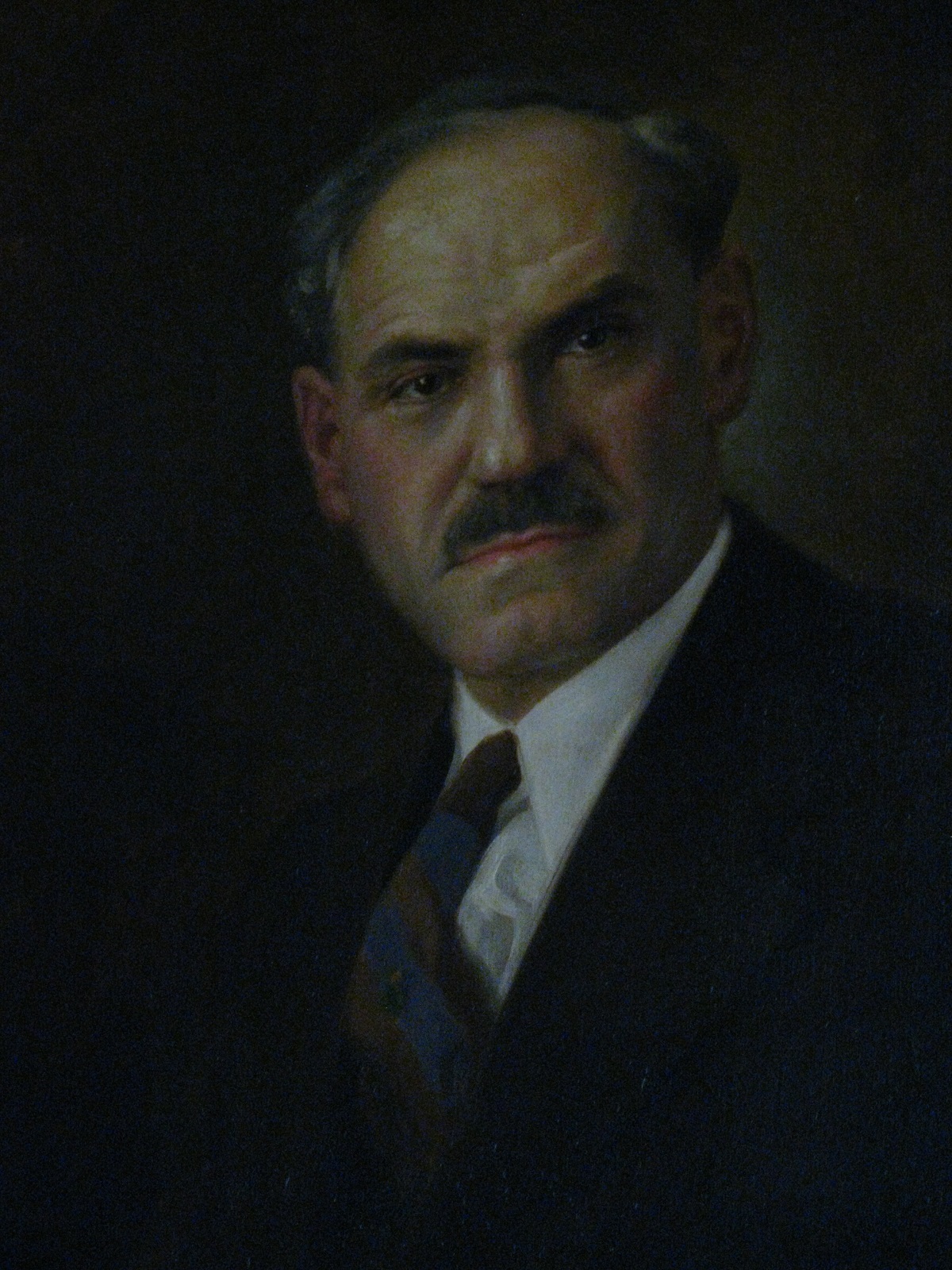
Loevinger (after)

Loevinger (after)

This week ten of our historic judges came back from the much-needed R and R (restoration and repair) sabbatical they took in September. All of us at the Law Library are amazed and impressed by the excellent work done by Midwest Art Conservation Center in Minneapolis. As you recall from this post, the library received a Legacy Grant which made this excellent work possible. Our Legacy Grant was financed with funds provided by the State of Minnesota from the Arts and Cultural Heritage Fund through the Minnesota Historical Society.

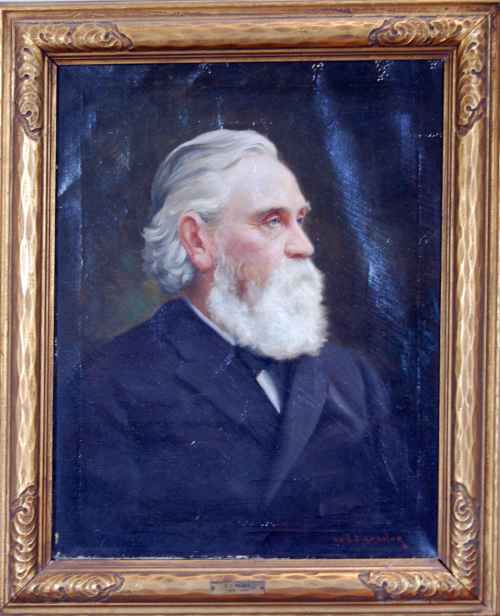
The restoration work that was done to the portraits did much in the way of smoothing wrinkles and impurities that were present in the canvasses, as well as restoring the vivid colors and details. Much “dirt/grime” had also been removed from all of the canvass surfaces. (Smoking used to be permitted in the Law Library. Similar to the way medical experts warn us, secondhand smoke had also taken a toll on the health and appearances of the portraits.) As an example of the excellent work that was done, consider the before and after shots of Judge Loevinger. The hole in his coat has been repaired, and the entire canvass has been treated to eliminate glare and bumps, illuminating the rich purple of Loevinger’s tie. Also consider how Judge Palmer’s canvass has now been, shall we way…moisturized(?), thus alleviating the severe brittleness and wrinkling that developed over time.  (Note:  The Law Librarian apologizes for any differences in these thumbnails which may be due to lighting and photo exposures.)  

Palmer (before)

Palmer (before)

Palmer (after)

Palmer (after)

So stop into the Ramsey County Law Library to help welcome our distinguished gentlemen back home.


Cream or Sugar?

Mayor Chris Coleman

Mayor Chris Coleman

Yesterday St. Paul Mayor Chris Coleman celebrated his reelection by serving free coffee to employees and visitors of the Ramsey County Courthouse.


Frederick Miles Catlin


Frederick M. Catlin

Frederick M. Catlin

Frederick Miles Catlin was born in Erie Pennsylvania on October 31, 1859. He graduated from Cornell University in 1881. He was admitted to the Pennsylvania Bar in 1994. Feeling the “Call of the West” in 1994, he started out for Seattle. He was changing trains in St. Paul and met up with friends, who persuaded him to stay. He was admitted to the Minnesota Bar that same year, and began practicing law in St. Paul. In 1898 he married Bertha Crosman, with whom he had two daughters: Eleanor and Elizabeth.  Catlin served in the Minnesota National Guard as a First Lieutenant and Judge Advocate. He was commissioned a First Lieutenant of the 15th Minnesota Infantry when the Spanish-American War broke out, and remained in service until the war closed in 1899. He ran for the state legislature in 1900, but was defeated.

He returned to the practice of law until 1911, when he was appointed Vice-President of the St. Paul Police Board. The Board President resigned shortly thereafter, and Catlin was thus appointed to that office. When the Chief of Police John O’Connor abruptly resigned and no proper successor could be found, Catlin became the Acting Chief of Police. According to The St. Paul Globe, O’Connor deliberately resigned 5 months before the mayoral election so as to send the City into a “reign of terror” and discredit then-Mayor Kelly. (The St. Paul Globe – 5-2-1912) Catlin sought to bring “efficiency” to the Department, organizing the Police Traffic Squad in 1912. But Catlin told reporters that he did not like police work and was a lawyer at heart. (Catlin was one of three Acting Chiefs from 1912-1913, before O’Connor was reinstated in 1914. According to information from the St. Paul Police Historical Society, Chief O’Connor reigned from 1900 to 1920 with the exception of a 2 year period during this time. Typically, politically connected men would be forced out of positions when a new mayor of different political stripes came into power. )

In 1913, Catlin’s police career finally ended when was appointed to the Ramsey County District bench to complete the unexpired 2-year term of Judge Hallam. During his term he issued an injunction against state law that ordered a minimum wage for women and minor workers. (The New York Times – 11-24-1914.) He then returned to the practice of law, only to be appointed again to fill the unexpired 2-year term of Judge Dickson in 1921. This term ended in 1923, after which he again returned to the practice of law. His health slowly deteriorated, and he died in 1929.

Catlin’s career may be a reflection of how political the community was at the time. He may have been an attractive “neutral” candidate during a corrupt era for many of these appointed positions that he held, as he lacked longstanding family or school connections in this area. For the same reason, he may have lacked a loyal voting base which could have carried him to an electoral victory.

The Law Librarian thanks the individuals at the St. Paul Police Historical Society, as well as the St. Paul Public Library and their excellent newspaper clipping collection for their assistance with this blog post.

POST-CORRECTION (Added November 6, 2013):   O’Connor’s resignation and the resulting “reign of terror” were described by the St. Paul Pioneer Press, not the St. Paul Globe.  The Mayor at the time was Herbert Keller, not Kelly. 

 
John M. Butler

John M. Butler

The Law Librarian was taken aback by last spring’s case of the Missouri man who was wrongfully convicted of rape in 1984 and couldn’t get released until this year for want of a DNA test. Beyond the sad story of the court worker who lost her job for helping the sister of this man obtain helpful documents needed to draft the successful motion for the DNA test that ultimately freed him, is the fundamental reality of how key DNA evidence is to modern law, not the least of which include determination of guilt and innocence. Suffice it to say that most legal professionals are not scientists, and thus need helpful information from people who are. To meet this end comes a leading expert on DNA, John M. Butler of the National Institute of Standards and Technology. He is the author of three books which explain DNA information and make the necessary connections to legal practicalities that legal professionals need. All three are available for check-out at the Law Library.

  • Forensic DNA Typing (2d ed. 2005) – Now in its second edition, Butler charts the history and development of DNA in criminal forensics with a text that caters to all audiences. This book examines the science of current forensic DNA typing methods by focusing on the biology, technology, and genetic interpretation of short tandem repeat (STR) markers, which encompass the most common forensic DNA analysis methods used today. Ten new chapters have been added to accommodate the explosion of new information since the turn of the century.
  • Fundamentals of Forensic DNA Typing (2009) – This book presents the step-by-step DNA analysis process beginning with collection of evidence at a crime scene to the statistical interpretation of the results. Also included are brief discussions of such news worthy topics as victim identification from the 9/11 attacks, the identification of the remains of the Romanovs, and the O.J. Simpson case. New applications, such as genetic genealogy and tracing domestic pet hairs to perpetrators, are also detailed. Its clarity and extensive list of online resources and study aids makes the subject accessible to lawyers who need enough cursory information to understand and speak to jury, law enforcement, crime scene investigators, legal professionals and government/legal policy makers.
  • Advanced Topics in Forensic DNA Typing: Methodology ( 2011) –  This book contains up-to-date coverage of essential topics in 9780123745132_p0_v1_s260x420[1]this important field and citation to articles and internet resources. The book builds upon the previous two editions of  Butler’s internationally acclaimed Forensic DNA Typing textbook. This book provides the most detailed information written to-date on DNA databases, low-level DNA, validation, and numerous other topics including a new chapter on legal aspects of DNA testing to prepare scientists for expert witness testimony. Over half of the content is new compared to previous editions.

DNA technology has changed (and continues to change) many modern plot lines, considering its role in the President Clinton-Monica Lewinsky scandal, identification of the remains in the Tomb of the Unknown Soldier, and revelation that Thomas Jefferson fathered a child by one of his slaves. Thanks to DNA, you will never see a great old movie like this one get rehashed for modern audiences.


Solo Practice Blogs

IMG_0849

The Ramsey County Law Library is committed to being a resource for small firms and solo practicing attorneys. With this in mind, the Law Librarian has identified several other blogs which offer unique insights and tips for such practices. These blogs were all found through the ABA Journal Blawg Directory.  Check them out!

  •  http://rurallawyer.com/  Thinking of leaving the metro and setting up practice back in your old home town? Get an honest inside peek at such a life change at this site.
  • http://lawyerist.com   This deep,wide blog contains covers different law practice points of view, including marketing, practice management, technology, career development, law school success, legal ethics, starting a new practice, and much more.
  •  http://solopracticeuniversity.com/blog  “…Devoted to all solo/small firm practitioners, discussing issues faced, offering advice, education, support and inspiration.” This site attacks those thorny issues exclusive to the solo practice, such as obtaining health insurance coverage, generating business, client relations issues, and so much more. The mainstay of this website is the collection of online courses aimed at solo practitioners.
  • http://www.smallfirminnovation.com   Operated by Clio, “the leading practice management, time & billing and client collaboration platform for small- to mid-sized law firms,” this site looks at nuts-and-bolts practice aspects including accounting, hiring, marketing, outsourcing, technology, work-life balance, and a “reference library.”
  • http://www.attorneyatwork.com   Dedicated to offering “one really good idea every day,” the Law Librarian is biased in favor of this site which also offers great book recommendations and fantastic book reviews.
  • http://www.iphonejd.com   Do you operate much of your practice from your iPhone or iPad? This blog is dedicated to assisting you.

So…maybe you have tips and stories of your own that should be shared? Maybe you need to start writing your own blog. Get started at http://wordpress.org .