Spare the News and Spoil the Blog

file7491250647364A Kansas legislator wants to give teachers and caregivers greater leeway in the physical discipline of children. Current Kansas law allows spanking without leaving marks, but her proposed bill would allow up to 10 strikes of the hand and smacks hard enough to leave redness and bruising. Unsurprisingly, the very idea of physically inflicting red marks on a child has some folks…well, seeing red.    This proposed bill would allow for such punishment of an 18-year old that is still in high school.  (So theoretically, Little Johnny could vote in next fall’s midterm elections, but still get a whoopin’ at school the next day.)  The bill would also allow a parent or caregiver to give authority to school personnel to apply corporate punishment to their child.  (An interesting predicament for a teacher, if some of the kids in the class could be spanked and some could not.)  It isn’t looking like this bill will go far, but it has certainly generated talk and controversy. 

The United States Supreme Court ruled in Ingraham v. Wright 430 U.S. (651 (1977) that the Eight Amendment prohibition against cruel and unusual punishment did not apply to corporal punishment in schools, and that this was an area of state authority.  Kansas is thus an exception to the 31 states that do not allow corporal punishment in schools.  A child abuse expert at a nearby hospital stated that spanking is not only less effective than other disciplinary tactics, but is psychologically damaging as well.  To the contrary there is always a choir of comments from those insisting they were spanked as a child and turned out “just fine.”  (Of course, whether or not someone is “just fine” is a subjective question and beyond the scope of this blog.)  Much more information can be found about this subject here.

Minnesota does not allow corporal punishment in schools, but local experts of both Minneapolis and St. Paul public schools suggest that the education system need better structure and/or discipline tactics than those currently employed.  See the Minnesota Department of Education for specific information regarding discipline in Minnesota schools.


There’s Probably a Department for That

9780160919510_0Even if you think you are a whiz at knowing what makes up our federal government with all of its moving parts, it never hurts to have a review source.  Better yet, it never hurts to have a more detailed source of contacts than what you find at public government websites.   Here is where The United States Government Manual 2013 (Federal Register) comes in.  Since it’s not always what you know so much as whom you know, this resource actually shows you both.

The United States Government Manual is quite simply the official handbook of the Federal Government. What if you need the phone number of the department that’s in charge of keeping snow shoveled from the Capitol sidewalks?  What if you want to submit a resume and cover letter to the Smithsonian, but need to know the name of the human resources director?  Or who would you need to subpoena in order to obtain documents previously held by the now-defunct Coal Mines Administration Department?  Hundreds of names and phone numbers come together in this handy manual.    In addition, there are complete lists of federal acronyms and abbreviations, organizational charts, and the Declaration of Independence and the Constitution for quick reference.  This resource is also available online, but flipping through the pages lets a user actually see the depth and detail of information possible.  This book is on our reference shelf, so come in to look it over and decide if this is something you need on your own bookshelf.   Meanwhile, check out its Table of Contents.


Tax Filing for Families

Image - cash money

As this brutal winter brings us up to tax time, many eligible folks can at least find some comfort in a possible tax refund.  Families in particular owe it to themselves to be aware of what credits they may be eligible for.  The most visible credit for families is The Earned Income Tax Credit (EITC), a refundable tax credit for people who worked in 2013.  The credit ranges from $2 to $6,044. Eligibility and credit amount depends on your income, family size, and other factors.  Unfortunately, about one in five taxpayers eligible for the federal Earned Income Tax Credit fail to claim it.  You can quickly glean your eligibility and for roughly how much with the EITC Estimator.  Other oft-overloooked credits are the Minnesota Dependent Care Tax Credit  and the K-12 Education Deduction and Credit.

Need some help preparing your tax forms?  To find one of the more than 250 free tax preparation sites in Minnesota, see  the Minnesota Departrment of Revenue  (income eligibility restrictions apply).


Packing Heat in the Cold State

OLYMPUS DIGITAL CAMERABy happenstance, the Law Librarian recently had opportunity to visit a full-service gun shop and shooting range.  As someone who had no prior experience with handguns, this experience was incredibly informative and educational.  It included detailed overviews of weapons (in my case both a semi-automatic and a revolver handgun), gun range safety and protocol information, and hands-on assistance from the staff in both loading and firing the weapons.   Visiting such an establishment can provide valuable hands-on experience for anyone who might be considering the purchase of a handgun, interested in a career in law enforcement, or a wants to treat a foreign guest to a uniquely “American” experience.

This encounter prompted a search for Minnesota handgun legislation and consumer tools.  The bulk of Minnesota handgun restrictions are codified in Minnesota Stat. Section 624.713, with Minnesota’s conceal and carry legislation being codified in Minnesota Stat. Section 624.714.  To obtain a permit to purchase/transfer a handgun or a permit to carry in St. Paul, bring a completed application to the St. Paul Police Department headquarters.  For Ramsey County municipalities and communities without police departments, see this page.  If your permit application is denied, you have the option of filing a Petition for Reconsideration.  Other helpful resources include the Ramsey County Sheriff’s Department, and this information brief from the MN House of Representatives Research Department regarding prohibited locations for firearms.  If you wish to sit down and read not just legal but practical facts and application pertaining to handgun possession, consider reading Minnesota Permit to Carry a Firearm Fundamentals by Michael Martin.

Felons are ineligible to possess handguns in Minnesota pursuant to Minn. Stat. Section 624.713, but Minn Stat. Section 609.165 lays out the procedure for the restoration of felon handgun rights.


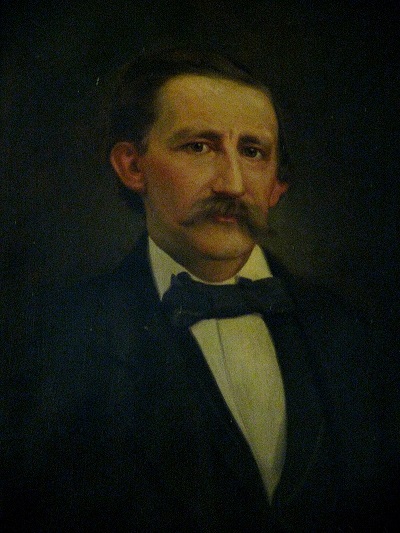
William Sprigg Hall

William Sprigg Hall

William Sprigg Hall

William Sprigg Hall was born on July 9, 1832 at South River in Anne Arundel County, Maryland.  He came to St. Paul, MN in 1854. That same year he was admitted to practice law and formed a law partnership with Harwood Inglehart.  (Minn. Reports 20, xi) In 1856 he was appointed Superintendent of the Common Schools of Minnesota, wherein he served for two years.    He married Elizabeth Seliman Welsh in 1857. That same year he was elected to the first Minnesota Senate as a Democrat, and served until 1860.

The Minnesota Court of Common Pleas was established in 1867 to handle the increase in business and resulting judicial backlog of the Ramsey County District Court.  Hall was promptly elected to this new position.*  (Williams, A History of the City of Saint Paul, and of the County or Ramsey, Minnesota, 428) As Judge, Hall worked with his colleagues and platted 160 new acres on St. Paul’s East Side.  Hall Ave. is named for him, with Arundel St., Kent St. and Maryland Ave. all being named for his birthplace.  Floral-themed street names (Geranium, Ivy, Rose, etc.) were designated as a play on his middle name, imagined as ‘sprigs’ of flowering plants.  (Collections of the Minnesota Historical Society 17, p. 624-5)

In 1869 Judge Hall presided over a criminal trial which featured Minnesota’s first black jurors. (Five of the jurors on the panel were black men.)  The facts are murky, but it was theorized that the Judge and the Sheriff orchestrated this mixed jury so as “to send a message” of sorts. (Green, A Peculiar Imbalance: the fall and rise of racial equality in early Minnesota, 174)  Judge Hall later heard a case involving a boy who became injured playing on a railroad turntable.  The Judge ruled in favor of the railroad, stating that there were no legal grounds on which to hold in favor of the trespassing boy. Upon its appeal, however, the Minnesota Supreme Court issued an opinion reversing Hall’s judgment that helped form the basis of modern tort law’s “attractive nuisance” doctrine. (Keffe v. Milwaukee & St. P. Ry. Co., 21 Minn. 207 (1875); Karsten, Heart versus Head: judge-made law in nineteenth-century America, 211)

Following a period of shaky health, Judge Hall was returning home to St. Paul from a trip to back to Maryland when he died aboard the train.  Only forty-two years old, he left behind a widow, two sons, and three daughters.  (Minn. Reports 20, x)

*This position was later merged into the Ramsey County District Court Bench.


It’s Time to Get Back to Work

DEED Librarian Dru Frykberg

DEED Librarian Dru Frykberg

It’s good news that unemployment is slowly but surely shrinking across the country, with national unemployment down to 7%.  Minnesota, which weathered the recession better than most states, currently has 4.6% unemployment.  Yet, state officials would still like to see unemployment numbers continue to fall with the creation of more jobs, which would allow still more Minnesotans to get back to work.  This is no doubt why Governor Mark Dayton recently announced that businesses looking to expand their operations and hire new workers in Minnesota may qualify for assistance from the newly-created Minnesota Job Creation Fund.  Administered by the Minnesota Department of Employment and Economic Development (DEED), the goal of this $25 million program is to create an estimated 5,000 new jobs statewide and attract another $450 million of private investment.  DEED is currently accepting applications from businesses seeking financial assistance to expand or locate in Minnesota. Businesses engaged in manufacturing, warehousing, distribution, and technology may be eligible.  More information on the Minnesota Job Creation Fund is available here.

Are you looking to start a business or expand your existing business but find you have questions? Much free information to assist you in starting or administering your business is available through DEED and can be ordered through this link.   Assistance in finding answers to specific questions may also be found by contacting DEED through their website, visiting their convenient St. Paul skyway location or by calling 651-259-7114.


Shoes Befitting a Plaintiff

IMG_3848[1]In a recent workers compensation slip-and-fall case, the Minnesota Supreme Court held in Dykhoff v. Xcel Energy, et al. that the plaintiff failed to prove a causal connection between her employment and the injury sustained.  In said case, the plaintiff-employee was required to attend training at the Xcel office for which she was instructed to wear dress clothes.  On training day she was wearing 2-inch wooden heels as part of her dress ensemble when she fell on a terrazzo floor and dislocated her knee.  Referring to Minnesota Statute sec. 176.021, the Court held that an employee must show that the job put her at increased risk of injury than what she would face in everyday life.  Here, there was no evidence that the floor this plaintiff encountered was more hazardous than one she would have encountered outside of her job.  The matter of the plaintiff’s shoes came up in oral argument, which had previously been found by the worker’s compensation judge to be a plausible explanation for the fall.  In his dissent, Justice Page stated that the majority ruling contradicted established precedent and standards of fairness, and speculated that “the court deems Dykhoff an undeserving plaintiff because she wore shoes with two-inch heels…”  This case garmered much attention in the January 6 edition of the Minnesota Lawyer, because the Court arguably nixed the previous “positional risk test” and the work-connection balancing test from Bohlin v. St. Louis County et al. , a 2000 WCCA opinion.

Beyond the workers compensation standards considered, the Dykhoff case is not the first time the Minnesota Supreme Court (re)considered a plaintiff’s footwear as possible proximate causation to a plaintiff’s injuries.  In an interesting case from 1968, the Court looked at shoes, fashion, and the design of an entryway mat meant to contend with heavy winter-sloppy shoe traffic before reversing a judgment against defendant bank building at the expense of the high-heel wearing plaintiff who worked in the department store within.   Do cases like these leave a person wearing shoes with 2-inch heels (and far beyond) on wobbly ground for potential causes of action?  How standard or mandatory have high heels become for female dress apparel (especially where a wearer’s job might be concerned)?  Probably standard enough that no one is surprised to see modern remedies developed to help wearers contend with the pain and dangers of high heels, including topical anesthetics and adhesives.   Must high-heel wearers contend with weaker legal footing as well?


A Brief Post about Brief Writing

5310427_big[1]Anyone facing down a major writing chore isn’t up for reading a massive instructional treatise on the task.  That is why A Brief Guide to Brief Writing (ABA 2013) by Janet S. Kole is so attractive.  Pocket-sized and only 132 pages, one can brush up on the main points in only a few minutes, or read its entirety in about an hour.  Some of the basic touch points covered in this no-frills book include what a brief looks like, how to write with your goals in mind, and some common hazards to avoid.  This tool can be valuable for attorneys who want to brush up on some points, law students seeking the best fundamentals to master brief writing, and for pro se litigants facing the task of writing a brief for the first (and last?) time. 

So consider taking a minute or two to peruse this gem before you start writing your next brief.


Alternative Dispute Resolution (ADR)

file000578704892[2]Your cousin wore out the welcome to your guest room months ago, but you don’t want to evict him and blemish his rental record.  Your neighbor’s dog has invaded your yard and destroyed your property, but you don’t want to drag your neighbor into court.  The weekend business you and your buddies started never got off the ground, but now they refuse to reimburse you for the start-up costs.  No matter how strong your potential case is on legal merits, you may understandably have cold feet about taking your neighbors, friends, or family members to court.  You wish for a fair resolution, but the court system might seem unnecessarily harsh and overbearing. Then there are also the painful expenses that come with traditional litigation, including lawyers and filing fees. 

Many people forget that there is often a more private (and perhaps more civilized) way to resolve issues. That, at least, is the hope offered by alternative dispute resolution (ADR), which includes both mediation and arbitration.  According to Nolo.com, the two are different in that a mediator typically lacks authority to render a decision, but instead assists the parties informally toward crafting their own agreement.  Most civil disputes can be mediated, including matters of contracts, leases, small business ownership, employment, and divorce. Arbitration is different in that an arbitrator acts much like a judge, conducting a contested hearing between the parties and then renders a legally binding decision.

Even if you do decide to file a case in civil court, you will eventually be offered information on ADR.  Rule 114 of the Minnesota General Rules of Practice requires information for parties on ADR, who are then required to discuss possible utilization of ADR in their case. The court may also order the parties to attend a non-binding ADR process.  Parties are not required to settle their differences through ADR, but they must at least discuss their differences with the neutral and attempt to resolve their differences prior to a trial.

See here  to see if ADR might be a possibility for you.


Ramsey County Veterans Court

file0001292130605[1]For soldiers returning home from active duty, the successful reintegration back into civilian life often poses one of their biggest battles.  In addition to the usual mental health issues and employment challenges, this struggle can also leave veterans more vulnerable to run-ins with the criminal justice system.   This is the reality behind the recent launch of the Ramsey County Attorney’s Office’s newest collaboration, the Ramsey County Veterans Court. 

With the help of a $350,000 federal grant, this effort “is targeted at veterans charged with nonviolent crimes who may be suffering from emotional and mental health issues, chemical dependency and employment problems connected to their service.” This project has much in common with the successful Mental Health Court insofar as using social services to address the underlying problems that can put veterans on the wrong side of the law, but also brings local and federal veterans officials to the table. According to St. Paul City Attorney Sara Grewing, the program will also connect veterans with resources like counseling, health care and U.S. Department of Veterans Affairs benefits. Another cornerstone of the Veterans Court is fellow-veteran mentorship.

The Veterans Court is designed to handle up to 25 cases at a time.  According to Kim Bingham (assistant director of the criminal division of the Ramsey County Attorney’s office), police will distribute business cards with Veterans Court contact information to suspected criminals who have served in the military, which will then allow veterans to apply for the program.  You can view the Veterans Court Facebook page  or find other Ramsey County veterans services here.