On 07.31.23, In CLE, Legal News, By The Law Librarian
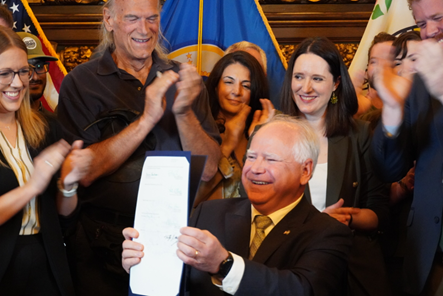
Governor Tim Walz signs House File 100 into law to legalize recreational cannabis in Minnesota. He is joined at the ceremony by Jesse Ventura, Minnesota governor from 1999 to 2003.
On May 30th, Governor Walz signed the cannabis finance and policy bill (HF 100) into law, which made Minnesota the 23rd state in the country to legalize adult use of recreational cannabis. Starting on Tuesday, August 1st people in Minnesota aged 21 and over will be permitted to possess, consume, and grow their own cannabis for personal use. The bill also establishes a new state agency, called the Office of Cannabis Management (OCM) to oversee the new recreational market, including business licenses; the OCM will also oversee the existing medical cannabis and hemp-derived markets.
Notable provisions include:
Legalizing the possession of up to 2 oz. of cannabis in public and 2 lbs. at home
Legalizing the use, possession, and transportation of cannabis paraphernalia
Legalizing the home cultivation of up to 8 cannabis plants (only 4 may be mature)
Creation of Cannabis Expungement Board tasked with possible expungement of felony offenses
Creation of the Office of Cannabis Management tasked with overseeing cannabis marketplace
The Ramsey County Law Library will be offering a CLE on the topic of Cannabis Law and Policy in Minnesota on Wednesday, August 9th from noon-1pm. Jason Tarasek, a long-time cannabis attorney with Vicente LLP, will discuss the evolution of cannabis law and policy throughout Minnesota and the United States. Jason will address the history of cannabis prohibition and the new legality of hemp, hemp derivatives, medical cannabis and adult-use cannabis. Please sign up here if you are interested in learning more about the legalization of recreational cannabis in Minnesota.
Libraries are united in the mission of providing accurate, relevant, and timely information for their patrons, a mission that has faced challenges in recent decades due to the rapid spread of misinformation online. Law libraries have encountered patrons with preconceived notions influenced by judicially unsupported legal arguments and obscure and questionable interpretations of law often promoted through conspiracy theories on the web. The most common example of this that I have encountered working in a law library is the sovereign citizen.
According to the Southern Poverty Law Center, members of the sovereign citizen movement “believe they are not under the jurisdiction of the federal government and consider themselves exempt from U.S. law.” Individuals who claim to be sovereign citizens reference a wide variety of constitutional interpretations, governmental decisions, and historical agreements to claim they are exempt from everything from taxes to traffic laws. In an effort to have their cases dismissed, criminal trial defendants have claimed that being a sovereign citizen means the court has no jurisdiction over them. This argument was recently used in the highly publicized trial of Darrell Brooks. However, scholars have characterized this criminal defense argument as having no legal applicability.
My coworkers at the Ramsey County Law Library and I have discussed how to answer these questions according to our dual responsibilities to neutrally answer every patron’s questions to the best of our ability and to provide the most accurate, relevant information to meet each patron’s need. Navigating these responsibilities proves difficult when a patron’s question originates from misinformation and conspiracy, so I have had to carefully consider my approach.
When encountering a conspiratorial ideology like the sovereign citizen movement, I try to understand what about this particular belief might appeal to an individual. The complexity of the legal system can be overwhelming, especially for people with no legal education or experience. Sovereign citizen ideology advertises a “golden ticket” out of this complexity by promising that once an individual asserts that a court has no authority over them, they will be free to go. Law library staff are in a unique position to combat the attractive simplicity in legal misinformation by connecting patrons with resources that explain legal processes and court procedures in plain language. Whatever information we can provide to demystify the legal system for the average person weakens the appeal of conspiracy theories, offering ways to navigate the system, instead of completely (and unsuccessfully) rejecting it.
In addition to investigating why a piece of misinformation may appeal to a patron, during difficult reference interactions, I emphasize my role as an educator, rather than an arbitrator of the truth. Public librarians have found success in addressing misinformed patrons by avoiding the immediate response of “that’s not true.” Instead, librarians guide the patron through a search for relevant information and instruct them on the information literacy tools needed to evaluate sources (I’m personally a fan of the C.R.A.A.P. test). The sovereign citizen movement, like many movements born of conspiracy theories, believes the government operates in secrecy to hide its illegitimate authority, so transparency in the search process and the source of information is vital in responding to these reference questions.
Instructing patrons in conducting their own searches and evaluating sources themselves is also key for law library staff upholding the boundary between legal advice and legal information. I cannot argue whether claiming to be a sovereign citizen will get an individual out of a traffic ticket or paying their taxes, but I can help a patron search case law to see how courts have previously ruled on this argument or help them find secondary sources where legal experts comment upon the applicability of such approaches.
My hope as an information professional is that I can develop trust with my patrons, making them feel heard even when I think they have been influenced by misinformation. I want to empower them to develop their research skills, so that when they make their own legal decisions, those decisions are based on the most accurate, relevant information available.
A few cases involving sovereign citizen arguments:
United States v. Benabe, 654 F.3d 753 (7th Cir. 2011)
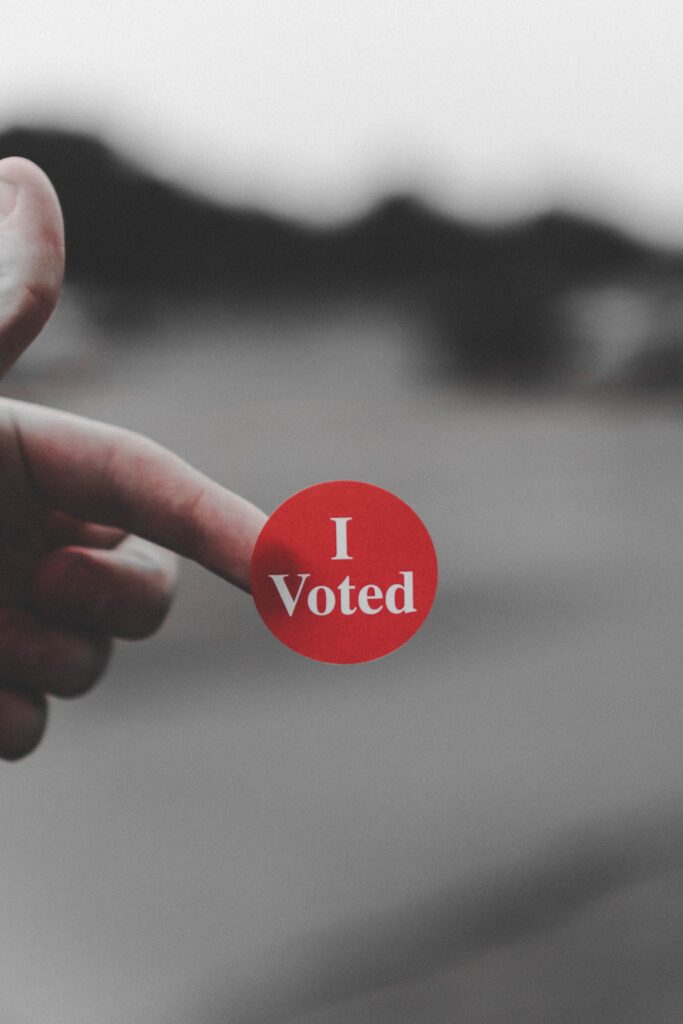
Residing in the place where one casts their ballot is one of the fundamental requirements for voting in the United States. But what does the requirement to prove one’s residence mean when a voter is homeless? How else does the lack of a permanent address impact unhoused voters and how can law librarians help all their patrons participate in our democracy?
The challenges homeless citizens face while attempting to vote are reflected throughout case law. In 1984, a case arose where plaintiffs who were unhoused claimed the New York State Board of Elections denied them the right to vote because they slept outside (as opposed to in shelters), meaning they were unable to provide an address of a “traditional residence” as required by the Board. A federal district court ruled that the Board of Elections could not refuse to allow individuals the right to vote solely because they were homeless.1
Although officials cannot bar unhoused citizens from voting because they lack a permanent address, other requirements for voting have raised concerns of unequal burdens for homeless voters. Plaintiffs have brought voter ID laws, such as Indiana’s law requiring in-person voters to present government-issued photo identification, to the U.S. Supreme Court, stating that such laws place an undue burden upon individuals who have been unable to obtain identification because they lack a permanent address. In 2008, the Supreme Court ruled that Indiana’s law was not unconstitutional and “the burden on voters [is] offset by the benefit of reducing the risk of fraud.”2Advocacy organizations continue to argue that providing identification remains a barrier to unhoused voters.
While unhoused people maintain their right to vote, individuals may not know how proof of residence works in their situation. Law librarians can contact their local election officials to determine the proof of residence requirements for their state.
For example, the Office of the Minnesota Secretary of State addresses homelessness and residency directly on its website. Minnesotans who are homeless can register before election day using the address or location of the place where they sleep, whether that place is a shelter, a friend or family member’s house, or somewhere outside. If a person sleeps outside, they can describe their usual sleeping location on the voter registration application, giving information such as the nearest cross-street or the general area of a public park they stay in. Election officials cannot verify a specific street address if a voter lives outside, so at the polls the voter will be asked to swear an oath stating that they live at the location they used to register.
Additionally, in Minnesota, one can register on election day even if one does not have any documents proving a permanent address. A person can go to the poll with a registered voter from the precinct who will sign an oath stating that the registering person does in fact live in the district. If one lives at a shelter, a staff person from the shelter can go to the poll to confirm that person resides there.
Finally, one must acknowledge that just because a person can technically vote does not mean that the actual process of filling out a ballet is accessible. Voters experiencing homeless may lack transportation to the polls or be unable to miss work due to financial instability. Voters may have been compelled to leave the district they recently registered in search of housing or employment. With over half a million Americans experiencing homelessness, the issues surrounding residence and voting represent a serious risk of disenfranchisement. National nonprofits, such as the National Coalition for the Homeless and Nonprofit Votes, continue to publish materials related to making voting more accessible for homeless citizens in one’s community. Law librarians can further serve their patrons experiencing homelessness by familiarizing themselves with both national and local recourses and information on the challenges facing unhoused voters, as well as the protections that all voters maintain to equally participate in democracy, regardless of housing status.
Emma Schmidtke is the summer Law Library Assistant at Ramsey County Law Library. She recently graduated with a Master’s in Library and Information Studies from the University of Wisconsin-Madison. She is passionate about the intersection of library services and equitable access to information.
Starting in August the Ramsey County Law Library will be hosting virtual CLEs once a month. Our first CLE is a follow-up to the presentation from our 2022 Law Day CLE. The same two speakers, Christy Hall, Senior Staff Attorney at Gender Justice and Michael Steenson, Bell Distinguished Professor of Law at Mitchell Hamline Law School will continue their conversation and analysis of Dobbs v. Jackson. They will also discuss the local Ramsey County order that struck down some of the state abortion restrictions.
Sign up for this CLE (one standard CLE credit pending) using the link below.
CLE Details:
Ramsey County Law Library CLE: Revisiting the Legacy of Roe v. Wade, Dobbs v. Jackson, and recent MN district court decision dealing with issues around the abortion debate
8/10/2022, 12:00 PM – 8/10/2022, 1:00 PM Time zone: (UTC-06:00) Central Time (US & Canada)
Christy Hall Senior Staff Attorney at Gender Justice Christy represents clients dealing with gender discrimination and practices in both state and federal courts. She has argued before the Eighth Circuit Court of Appeals as well as the Minnesota Court of Appeals. Christy litigates cases involving discrimination in employment, housing, health care and education. She is proud of her ground-breaking work on transgender rights in the Affordable Care Act and the Minnesota Human Rights Act.
Michael Steenson Bell Distinguished Professor of Law at Mitchell Hamline Law School Professor Steenson currently teaches at Mitchell Hamline School of Law in the areas of Torts, Constitutional Law and American Legal History. He is a graduate of the University of Wisconsin as well as the University of Iowa School of Law. Also, a member of the American Law Institute and a Fellow of the American Bar Foundation. Along with Professor Peter Knapp, he is the co-reporter for the Minnesota Civil Instruction Guides.
If you have questions about the session, please contact the law library at 651-266-8391.
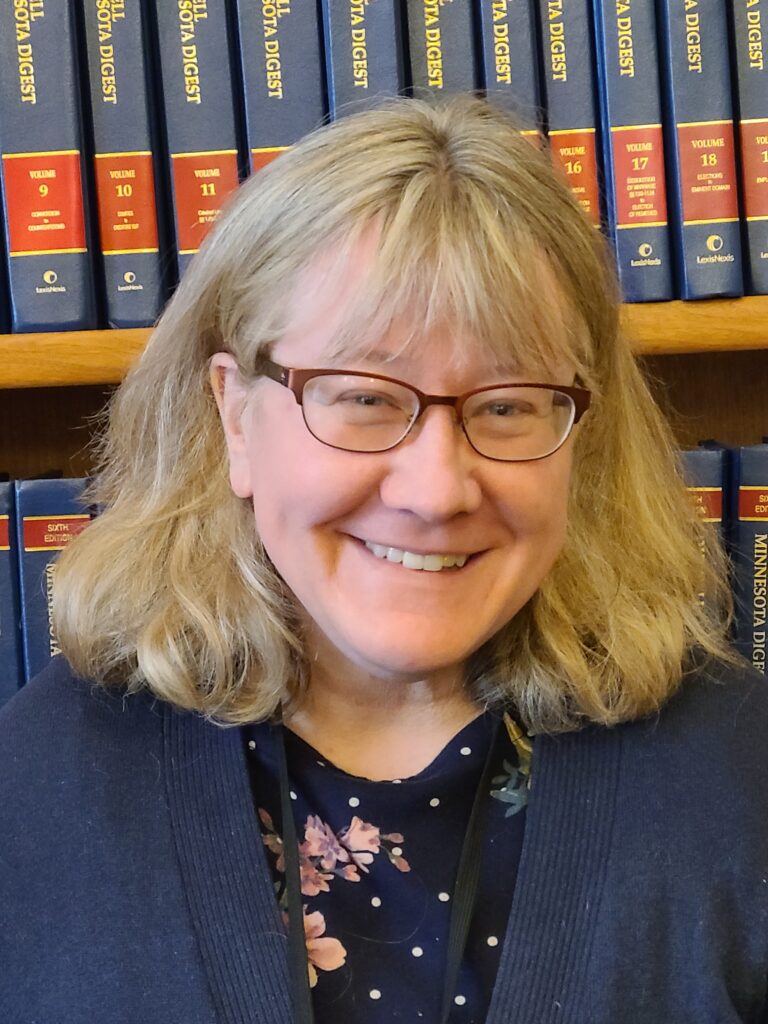
Today the law library would like to introduce our new director, Shannon Stoneking. Shannon started on April 18th, and she was previously the manager of the Dakota County Law Library. In her new position, Shannon will continue to work on making the law library a place where Ramsey County residents can receive help with their legal questions.
Shannon has had a variety of experiences that led her to Ramsey County. She spent twelve years in Scott County as a law clerk for both Judge Macklin and Judge Lennon. In fact, it was her researching for the judges that brought her to the law library. There, Scott County Law Librarian Mary Freyberg assisted her, and encouraged her interest in librarianship. Shannon enrolled in the Library and Information Science program at the University of North Texas. A few months later, an opportunity to move in the field of law librarianship presented itself, and with the encouragement of Mary Freyberg, Shannon took the plunge and applied. In September of 2013, Shannon became the manager of the Dakota County Law Library.
At Dakota County, Shannon was responsible for three locations, the main branch in Hastings, the Galaxie satellite branch in Apple Valley, and at the courthouse in West St. Paul. In her eight years at Dakota County, she created strong partnerships that improved access to justice for her patrons. Small changes such as hiring bilingual staff, creating clinics staffed by multilingual attorneys, partnering with the public library branch librarians to bring legal information for seniors were just a few of the programs that she initiated. During the pandemic, she transitioned into an online world where she presented CLEs via Zoom, and she provided legal information and research to remote users.
The librarians in Dakota County really appreciated the work Shannon did at the law library. Margaret Stone, Director of Dakota County Library said:
Shannon was a great partner in serving the Dakota County community. She is a pleasure to work with, knowledgeable, professional, supportive to her staff and I always appreciated how she made public legal service a priority in her role. Shannon worked hard to help people reach their best possible outcome through the many legal clinics she offered and her work one on one while staffing the information desk. We will miss her; Ramsey County is fortunate to have Shannon as director of the Law Library.
Shannon comes to Ramsey County, energized and ready to continue where Sara Galligan left off. When she is not working on access to justice issues or running the law library, Shannon is interested in philosophy (she majored in Philosophy as an undergrad at Providence College) and participates locally at the Socrates Café. But if you really want to start a conversation with her, ask her about hockey. She is an avid fan and player, and she frequently watches her three nephews play hockey. She is a devoted Gopher Hockey fan and hopes to see the Minnesota Wild make a long run into the postseason.
Please stop by the law library to meet Shannon! She is looking forward to meeting you.
Please join us in congratulating Sara Galligan on her retirement. Sara has been the Director of the Ramsey County Law Library since 2008, and she leaves the library and Ramsey County a better place.
For the past almost fourteen years, Sara has strived to make the law library responsive to the needs of Ramsey County residents. She has forged relationships with groups outside of the law library, including the Ramsey County Public Library, Ramsey County District Court, Minnesota Justice Foundation, the Ramsey County Bar Association, the Southern Minnesota Regional Legal Services, and the Volunteer Lawyers Network to establish policies and develop resources that increase access to justice.
For example, Sara managed two clinics at the law library. The Housing/Conciliation Court clinic is open to Ramsey County residents or those with a case pending in Ramsey County. The law library also hosts the Criminal Law Clinic, which is open to anyone living in Minnesota. In addition, the law library provides space for Ramsey County’s Criminal Expungement clinic, which suspended operations during the pandemic, but hopes to open later this year.
Sara was also the impetus that created the law library’s Antiracism Booklist, and continues to advocate for collecting titles that help readers learn about cultures and life experiences different from their own. This forward-thinking attitude is also reflected in the library’s collection development policy, which was approved by the Law Library Board of Trustees last December.
Sara’s work in bringing access to justice issues to the forefront was recognized nationally when she chaired a special committee of the American Association of Law Libraries that created a report on Law Libraries and Access to Justice. She is also an active member of the Self-Represented Litigation Network, and with her colleagues created a story map 2019, which shows how self-represented litigants are helped by law libraries.
In addition, her leadership skills have been recognized not once, but twice by the Minnesota legal community. Minnesota Lawyer sponsors several annual awards to recognize outstanding members of the profession. In 2003, Sara was recognized as an “Up and Coming” attorney. This award honors newer attorneys to the Minnesota Bar who have significant professional accomplishment, leadership service to the community and the profession. In 2015, Sara was once again honored, this time as an “Unsung Legal Hero.” The Unsung Legal Hero Award is presented to the state’s most talented and dedicated legal support professionals.
In 2019, under Sara’s leadership, the Ramsey County Bar Association honored the Law Library with the Liberty Bell Award. This award is presented annually to honor one non-lawyer’s activities that greatly benefit our legal community and our Ramsey County citizens by increasing the effective functioning of our government and courts through understanding, encouragement, and respect for our institutions and the rule of law.
The law library is going to miss Sara, not just for her leadership but also for the example she has set for other law librarians in Minnesota. Congratulations Sara! All the best for a well-earned retirement.
Greetings readers of the Ramsey County Law Library Blog. Today we’d like to call your attention to two upcoming CLE programs you might want to attend.
On Tuesday March 22, the Minnesota TriBar Association is presenting “Bartenders Wanted | Women Need Not Apply.” The speaker is the Honorable Ramsey County District Court Judge John Guthman. Judge Guthman will present on the life and legal case of Clara Anderson, a woman bartender in 1940’s St. Paul. After the St. Paul City Council enacted an ordinance that prevented women from lucrative bartending positions, she went to court. Her legal battle lasted three long years. To find out if she prevailed in her case, consider attending this CLE. Registration is open until March 20.
On March 30, the Ramsey County Bar Association and the Law Library are co-sponsoring a CLE to help attorneys increase their research skills with the LexisNexis Digital Library. The presenter, Kaitlyn Forsyth of LexisNexis, will show users that the library is more than just a book-lending platform. The digital library can be a new research tool to aid legal research and information organization. Registration for this program is open now and is free to Ramsey County Bar Association members.
Bartenders Wanted | Women Need Not Apply Date: Tuesday, March 22, 2022 Time: 12:00 PM to 1:00 PM Cost: MSBA/HCBA/RCBA Members: $15; Non-Members: $50
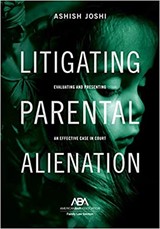
While there are some who deny it exists, most courts accept the notion that parental alienation is a problem and that it occurs when a child carries views of the other parent that aren’t justified by reality. In Litigating Parental Alienation, author Ashish Joshi explains the research and context for parental alienation (PA) and provides tips, including a five-factor model, for litigating the issue.
In her foreword to the book, Michigan Supreme Court Justice Mary McCormack notes that parental alienation may be unintentional. Whether intentional or unintentional, PA causes harm to a child that can be serious and long-lasting. The chief justice also states that alienating behaviors “harm children and parents alike. And they make family law judges’ work exceptionally difficult to get right. When practitioners know more about the substance of parental alienation, they put themselves in the best position to advocate for their clients and put the courts in the best position to reach the right results.” (p. xiii)
PA manifests when a child allies himself or herself strongly with the preferred parent and rejects a relationship with the other parent without legitimate justification. In Chapter 4, the author explains the “five-factor model” that infers that parental alienation has occurred. The five factors are: the child resists a relationship with the parent; the child had a prior positive relationship with the rejected parent; there is a lack of abuse by the rejected parent; there are alienating behaviors by the preferred parent; the child exhibits alienation behaviors. (pp 83-104) Using caselaw examples, Joshi fleshes out how the factors are investigated and used in litigation.
Expert testimony can support the existence of parental alienation, and the Joshi analyzes both Frye and Daubert tests for admissibility of evidence. The author also explains the role of the guardian ad litem and lists best practices for GALs who represent children in PA cases. While courts discern whether or not PA has occurred, they also aim to correct distortions and try to reunify the alienated child with the rejected parent. (p. 50)
Throughout the book, Joshi examines court cases from around the country, including some from Minnesota. He also introduces the Duluth power and control wheel in his discussion of PA and domestic violence. He notes that actual child abuse can differ from PA; however, PA is a form of family violence.
The book is available from the Ramsey County Law Library. The library also has the 2018 title Parental Alienation and Abuse Allegationspublished by the National Business Institute.
Ashish S Joshi, Litigating Parental Alienation: Evaluating and Presenting an Effective Case in Court. Chicago, Illinois : ABA, American Bar Association, Family Law Section, 2021.
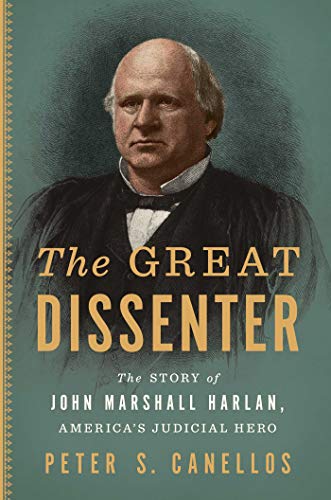
As we acknowledge Black History Month, we celebrate a 19th Century White man who was an impressive voice for racial equality. Described as the “Great Dissenter,” Justice John Marshall Harlan offered the lone, dissenting opinion in Plessy v. Ferguson (16 S.Ct. 1138, 1896), the Supreme Court case that approved separate but equal as a legal precedent and strengthened Jim Crow’s grip on American society.
Author Peter S. Canellos provides an enlightening and well-researched book about Justice John Marshall Harlan. Entitled The Great Dissenter: The Story of John Marshall Harlan, America’s Judicial Hero, this inspiring biography explains how and why Harlan became an advocate for color-blind justice. The focal point of the book is Harlan’s dissent in Plessy. The author details how Harlan stood passionately for equality even though his esteemed colleagues on the Supreme Court favored the entrenched, biased views of Jim Crow America.
Canellos describes Harlan’s early years, his political ventures, and his life as a justice. Harlan came from a family steeped in education and law. His father, James Harlan, was a lawyer who had the best law library in the state of Kentucky. He proudly named his son after Chief Justice John Marshall. However, more impactful than the name he was given was the relationship Harlan had with his adopted brother Robert Harlan, a bi-racial man who some thought to be the actual son of James Harlan. While Robert was a successful businessman, John Harlan witnessed a society that forced Robert and his family to flee to Britain to escape the racial injustices leading up to the Civil War.
Canellos describes Kentucky’s role in the Civil War, detailing the “armed neutrality” of the state against both Confederate and Union troops. Harlan supported Lincoln and fought with Sherman to defend Kentucky against Confederate attack. Harlan left the military to become Kentucky’s attorney general.
Appointed to the U.S. Supreme Court by President Rutherford B. Hayes, Justice Harlan grappled with cases that failed to enhance the equality that was promised by the post-war amendments. Justice Harlan surmised that the evolving legal system was “construed as to defeat the ends the people desired to accomplish, which they attempted to accomplish, and which they supposed they had accomplished by changes in fundamental law.” (p. 28)
Harlan’s uncompromising stand against inequality is depicted by his famous dissent in Plessy. Canellos describes the case and the surrounding events in a chapter entitled “The Humblest and Most Powerful.” The case involved the Louisiana “Separate Car Act,” and the defendant, Homer Plessy, carefully plotted the actions that led to his arrest for sitting in the whites-only part of the train. When the case went to the U.S. Supreme Court, all but one of the justices reasoned that those laws requiring racial separation were within Louisiana’s police power. In a heroic departure from his fellow justices, Harlan stood for Black rights and eloquently wrote in his dissent that:
“The white race deems itself to be the dominant race in this country. And so it is, in prestige, in achievements, in education, in wealth, and in power. So, I doubt not, it will continue to be for all time, if it remains true to its great heritage, and holds fast to the principles of constitutional liberty. But in view of the constitution, in the eye of the law, there is in this country no superior, dominant, ruling class of citizens. There is no caste here. Our constitution is color-blind, and neither knows nor tolerates classes among citizens. In respect of civil rights, all citizens are equal before the law. The humblest is the peer of the most powerful. The law regards man as man and takes no account of his surroundings or of his color when his civil rights as guaranteed by the supreme law of the land are involved. It is therefore to be regretted that this high tribunal, the final expositor of the fundamental law of the land, has reached the conclusion that it is competent for a state to regulate the enjoyment by citizens of their civil rights solely upon the basis of race.”
Justice Harlan served on the Supreme Court until his death in 1911. Well after his death, Justice Harlan’s legacy was influential in Brown v. Board of Education which excised “separate but equal” from the legal landscape. Thurgood Marshall, who argued the 1954 case, regarded Harlan’s dissent as the “bible” that he relied upon for attacking segregation. (p. 494) Harlan’s inspired defense of our color-blind constitution failed to inspire those in power at the end of the 19th century. However, the notion of a color-blind constitution is a simple but powerful message for all Americans, and his actions voicing that message are a compelling example today.
The book is available in the Ramsey County Law Library.
Have you had a chance to check out an ebook from the Ramsey County Law Library? Minnesota attorneys can now research from their homes or offices by using the online LexisNexis Digital Library hosted by the Ramsey County Law Library.
The Lexis Digital Library allows users to access titles that the Ramsey County Law Library has in its print collection. Some of the popular titles available include
Minnesota Family Law Practice Manual
Minnesota Residential Real Estate
Pirsig on Pleading
Stein on Probate
Also included are the Lexis Practice Guides that provide concise answers to walk you through common issues in a specific area of Minnesota law.
A title that was just added to the product is Dunnell Minnesota Digest, an essential source to use at the beginning of the research process. We’ve also added new titles that are available only on the Digital Library platform.
A complete list of titles that are in the LexisNexis Digital Library is posted here, or you can call the law library to ask questions.
Remember – all attorneys registered to practice in Minnesota can access this useful research tool. Contact the library via phone at 651-266-8391 or via email at asklawlibrarian@co.ramsey.mn.us to set up your account.