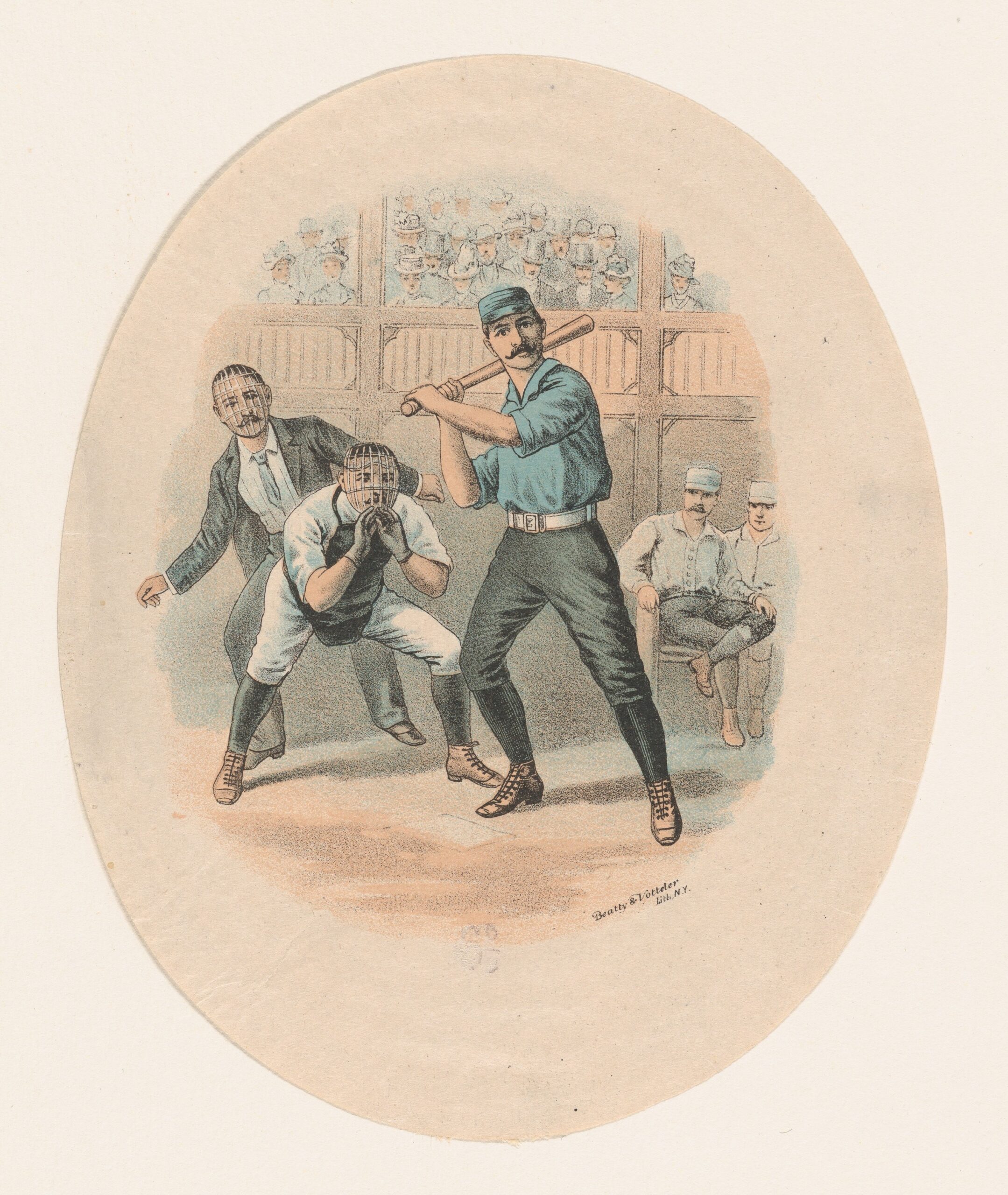
Metropolitan Museum of Art, CC0, via Wikimedia Commons
The Ramsey County Law Library currently hosts one virtual continuing legal education (CLE) course on the second Wednesday of each month. For April 2024 our presenter will be Marshall Tanick of Meyer Njus Tanick. He will present on the topic: The (Updated) Law & Lore of Baseball in Minnesota. Please note that this month’s CLE will be hosted via Zoom.
CLE Details & Registration info:
Sign up for this CLE (one standard credit pending) using the registration link below.
04/10/2024, 12:00 PM – 04/10/2024, 1:00 PM Time zone: (UTC-06:00) Central Time (US & Canada)
Please register and join this event. After registering, you will receive a confirmation email containing information about joining the webinar.
Presentation title: The (Updated) Law & Lore of Baseball in Minnesota
Speaker biography:
Marshall H. Tanick is a Twin Cities Constitutional law attorney with the law firm of MEYER NJUS TANICK with offices in Minneapolis, St. Paul, and St. Louis Park as well as other Upper Midwest cities. He is a graduate of Stanford Law School and Certified as a Senior Civil Trial Specialist. He writes and speaks frequently on a variety of legal topics as well as annual Supreme Court reviews and previews.
If you have questions about the session, please contact the law library at 651-266-8391.
Our goal here at the Ramsey County Law Library is to connect people with relevant legal information and resources. Whether your are dealing problems like divorce, custody, evictions, debt collection, traffic tickets, or other legal concerns, we are here to assist you! Although, as law librarians, we are not able to provide you with legal advice or representation, we are familiar with the legal resources locally available to Ramsey County residents and can refer you to agencies from whom such assistance may be available. You can reach us in person on the 18th floor of the Ramsey County Court House M-F 8:00am-4:30pm, by phone (651-266-8391), or via email at asklawlibrarian@co.ramsey.mn.us.
However, if you aren’t able to talk with us directly, there are a number of online resources available which you may find helpful. For residents of Ramsey County and Minnesota, more generally, we recommend the following online resources:
Court Help
Get help with your court case, forms, and hearings from the Minnesota Judicial Branch. Check out the “Help Topics” tab to find information, resources and forms specific to your legal needs.
DIY Guides
Use step-by-step guides, form-filling tools, and other resources provided by LawHelpMN. They offer self-helpand informational resources in English, Español, Hmoob, and Somali.
Legal Aid
Southern Minnesota Regional Legal Services provides free, high-quality legal help to low-income people in critical civil matters. SMRLS serves people in three regions: southeast Minnesota, southwest Minnesota, and the east metro.All applicants must be screened for eligibility, call 1-877-696-6529, or apply online.
Find a free, local lawyer who can assist you with your situation at the Volunteer Lawyers Network of Minnesota. For Minnesota residents or those with cases venued in Minnesota, please call their intake line at (612) 752-6677 or complete an online intake form to see if you may qualify for their services.
Private Bar
Hire a lawyer by connecting with your local bar association. The Minnesota Bar Association and Ramsey County Bar Association can help you find local, private attorneys who specialize in areas relevant to your situation. Check out their FAQs for tips on when and how to hire an attorney.
The Ramsey County Law Library currently hosts one virtual continuing legal education (CLE) course on the second Wednesday of each month. For March 2024, our presenters will be Jon Tynjala & Judith Rush from Lawyers Concerned for Lawyers. They will present on the topic: Ethical Dangers of Isolation in the Legal Profession. Please note that this month’s CLE will be hosted via Zoom.
CLE Details & Registration info:
Sign up for this CLE (one Ethics credit pending) using the registration link below.
03/13/2024, 12:00 PM – 03/13/2024, 1:00 PM Time zone: (UTC-06:00) Central Time (US & Canada)
Please register and join this event. After registering, you will receive a confirmation email containing information about joining the webinar.
Presentation title: “Ethical Dangers of Isolation in the Legal Profession”
Presentation description: Loneliness and isolation present an urgent public health challenge, prompting the U.S. Surgeon General to issue a public health advisory to urge the nation’s immediate awareness and action. As lawyers, we have been identified as the loneliest workers in America, and our isolation presents a significant risk to our mental and physical health and our ability to conform to our professional obligations. This program explores some of the causes and effects of isolation, the impact on our professional responsibilities, and ways we can address both causes and effects of isolation by building a culture of connection and mutual care in the legal profession.
Speaker biographies:
Jon Tynjala, Esq., joined Lawyers Concerned for Lawyers(LCL) as a Case Manager in 2022. Jon received his B.A. in Business Administration from the College of St. Thomas in 1989, and his J.D. from the University of Minnesota Law School in 1995. Prior to his affiliation with LCL, Jon was engaged in private practice serving businesses and their owners at larger and medium sized law firms in Minnesota, and, most recently, at a two-person firm in Maple Grove.
Judith (Judie) Rush joined LCL as Outreach Manager in 2022 following a legal career practicing law, teaching, and serving the legal and broader community doing volunteer work focused on ethics and professional responsibility, legal education, and helping lawyers and law students enjoy happy, healthy & ethical lives. Prior to joining LCL, Judie served as the Director of Mentor Externship at University of St. Thomas School of Law, where she continues to build relationships with mentors and mentor students. She has enjoyed a successful solo practice and teaching as an adjunct at Hamline University School of Law and William Mitchell College of Law, teaching professional responsibility and legal advocacy. Judith served as a volunteer in Minnesota’s discipline process for 18 years, including six years as Chair of the Lawyers Professional Responsibility Board. She has also served as Co-Chair of the ABA Co-LAP’s Law Student Services Committee, Chair of Lawyers Concerned for Lawyers and the MSBA Life & the Law Committee and served on the Minnesota Supreme Court Advisory Committee to Review the Discipline System. Judie earned her undergraduate degree, magna cum laude from Hamline University and her J.D. magna cum laude from William Mitchell College of Law.
If you have questions about the session, please contact the law library at 651-266-8391.
The Ramsey County Law Library currently hosts one virtual continuing legal education (CLE) course on the second Wednesday of each month. For February 2024, our presenter will be John Carney of Carney Forensics. He will present on the topic: How Evolving Everyday Technology is Impacting Civil and Criminal Litigation. Please note that this month’s CLE will be hosted via Zoom.
CLE Details & Registration info:
Sign up for this CLE (one standard credit pending) using the registration link below.
02/14/2024, 12:00 PM – 02/14/2024, 1:00 PM Time zone: (UTC-06:00) Central Time (US & Canada)
Please register and join this event. After registering, you will receive a confirmation email containing information about joining the webinar.
Presentation title: “How Evolving Everyday Technology is Impacting Civil and Criminal Litigation”
Speaker biography:
John Carney is the owner, Chief Technology Officer, and lead digital forensic examiner of Carney Forensics. He earned his JD in law and dispute resolution from Mitchell Hamline School of Law, and is a licensed attorney in both federal and state courts in Minnesota. He is also an expert witness who testifies regularly in federal and state courts nationwide. John is proud to provide pro bono digital forensic services to the Great North Innocence Project, where he assists their staff and volunteer attorneys with exonerations of wrongful convictions in Minnesota, North and South Dakota.
If you have questions about the session, please contact the law library at 651-266-8391.
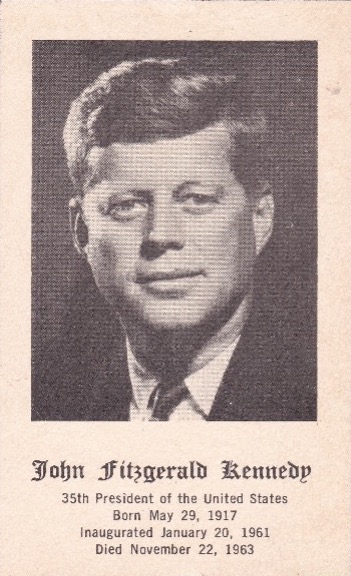
The Ramsey County Law Library currently hosts one virtual continuing legal education (CLE) course on the second Wednesday of each month. For January 2024 our presenter will be Marshall Tanick of Meyer Njus Tanick. He will present on the topic: The JFK Assassination & Minnesota-Where were you?. Please note that this month’s CLE will be hosted via Zoom.
CLE Details & Registration info:
Sign up for this CLE (one standard credit pending) using the registration link below.
01/10/2024, 12:00 PM – 01/10/2024, 1:00 PM Time zone: (UTC-06:00) Central Time (US & Canada)
Please register and join this event. After registering, you will receive a confirmation email containing information about joining the webinar.
Presentation title: The JFK Assassination & Minnesota-Where were you?
Speaker biography:
Marshall H. Tanick is a Twin Cities Constitutional law attorney with the law firm of MEYER NJUS TANICK with offices in Minneapolis, St. Paul, and St. Louis Park as well as other Upper Midwest cities. He is a graduate of Stanford Law School and Certified as a Senior Civil Trial Specialist. He writes and speaks frequently on a variety of legal topics as well as annual Supreme Court reviews and previews.
If you have questions about the session, please contact the law library at 651-266-8391.
During this giving season and as we approach the New Year, the Ramsey County Law Library is grateful for several local organizations we have worked with over the years to help increase access to justice for our residents. If you are looking to donate to a worthy cause, we encourage you to consider the following non-profit organizations:
Volunteer Lawyers Network: Established in 1966, Volunteer Lawyers Network, Ltd. (VLN) is a 501(c)3 non-profit which provides civil legal services to low-income people through volunteer attorneys. VLN’s mission is to protect and promote the basic human needs of people in poverty through the power of legal volunteers. In the 2021-2022 fiscal year, VLN provided 5,826 free legal services to 4,943 low-income Minnesotans in need. VLN supports the patrons of Ramsey County Law Library by assisting with our monthly criminal expungement self-help clinic.
Neighborhood Justice Center: Neighborhood Justice Center (NJC) was born from a vision of a more just criminal justice system, free from racism and discrimination. NJC launched as a non-profit organization in 1973 by a passionate group of community advocates, attorneys, judges, and neighbors. As one of the longest-standing public defense corporations in Minnesota, their team provides the highest quality legal support, at no or low cost to clients. NJC supports the patrons of Ramsey County Law Library by assisting with our monthly criminal expungement self-help clinic.
Minnesota Justice Foundation: Minnesota Justice Foundation (MJF) was incorporated in 1982 by a group of University of Minnesota law students who were concerned about serving their communities. These visionary students believed that lawyers and law students have a special professional obligation to provide quality legal services to those who cannot afford legal representation. In addition, they were committed to improving the law school environment and the legal profession by calling attention to the need for legal services for low-income individuals and for creating pro bono opportunities for law students and lawyers. MJF has helped to support the patrons of Ramsey County Law Library by assisting with some of our law clinics. Bonus: If you are a Target shopper, look for MJF in your Target circle app. They are in the voting cycle until Dec. 31.
Southern Minnesota Regional Legal Services: Founded in 1909, Southern Minnesota Regional Legal Services (SMRLS) is the oldest legal aid provider in the state. Originally established as a branch of Associated Charities, to provide legal advice and representation to low-income people, the organization became Legal Assistance of Ramsey County (LARC) in 1966 and was among the first legal aid programs in the country to receive federal funding. In 1979, LARC was merged into SMRLS when services were expanded to cover the southern third of the state. SMRLS currently serves the 33 counties of southern Minnesota, including the Twin Cities’ east and south metro, as well as agricultural workers throughout Minnesota and North Dakota.
The Ramsey County Law Library currently hosts one virtual continuing legal education (CLE) course each month. For December 2023 our presenter will be Matt Eichenlaub of HOME Line. He will present an on the topic of Changes to Landlord/Tenant Laws in Minnesota. Please note that this month’s CLE will be hosted via Zoom.
CLE Details & Registration info:
Sign up for this CLE (one standard credit pending) using the registration link below.
12/13/2023, 12:00 PM – 12/13/2023, 1:00 PM Time zone: (UTC-06:00) Central Time (US & Canada)
Please register and join this event. After registering, you will receive a confirmation email containing information about joining the webinar.
Presentation title: Changes to Landlord/Tenant Laws
Presentation description: 2023 saw some of the most comprehensive changes in Minnesota’s Landlord Tenant Law in over two decades. The changes touch privacy, security deposits, evictions, emergency repairs and cannabis use. This CLE presentation will be a summary of some of the larger changes.
Speaker biography: Matt Eichenlaub is an attorney at HOME Line. He began with HOME Line in April of 2008. Matt worked as a debt collection attorney prior to working at HOME Line. Matt graduated from Hamline University School of Law in 2004.
Matt’s work has focused on foreclosure law as it relates to tenants. He has advised over 3,500 tenants whose landlords are in foreclosure. It is likely that he has advised more tenants in foreclosure than any other attorney in the State of Minnesota. In addition to his foreclosure work, Matt advises tenants about their rights regarding evictions, security deposit disputes, and repairs, amongst other topics. He has advised over 19,500 Minnesota renter households. He has given over 190 speeches to the high school students, landlords, and tenants.
If you have questions about the session, please contact the law library at 651-266-8391.
The Ramsey County Law Library currently hosts one virtual continuing legal education (CLE) course each month. For November 2023 our presenter will be Deanna Natoli from the Office of Lawyers Professional Responsibility. She will present on the topic: Public Discipline (so far) in 2023. Please note that this month’s CLE will be hosted via Zoom.
CLE Details & Registration info:
Sign up for this CLE (one EOB credit pending) using the registration link below.
11/8/2023, 12:00 PM – 11/8/2023, 1:00 PM Time zone: (UTC-06:00) Central Time (US & Canada)
Please register and join this event. After registering, you will receive a confirmation email containing information about joining the webinar.
Presentation title: Public Discipline (so far) in 2023
Speaker biography:
Deanna Natoli joined the Office of Lawyers Professional Responsibility in November 2021 after spending over 11 years as a criminal prosecutor in both Minnesota (Dakota and Isanti counties) and Michigan (Eaton County). Deanna received her J.D. from Western Michigan University Cooley School of Law and two Bachelor of Arts degrees from Michigan State University. Deanna is a member of the Minnesota State Bar Association and has volunteered as an MSBA Mock Trial judge. Deanna previously served on the Minnesota County Attorney Association’s Appellate and Diversity committees.
If you have questions about the session, please contact the law library at 651-266-8391.
On 10.02.23, In CLE, Legal News, By The Law Librarian
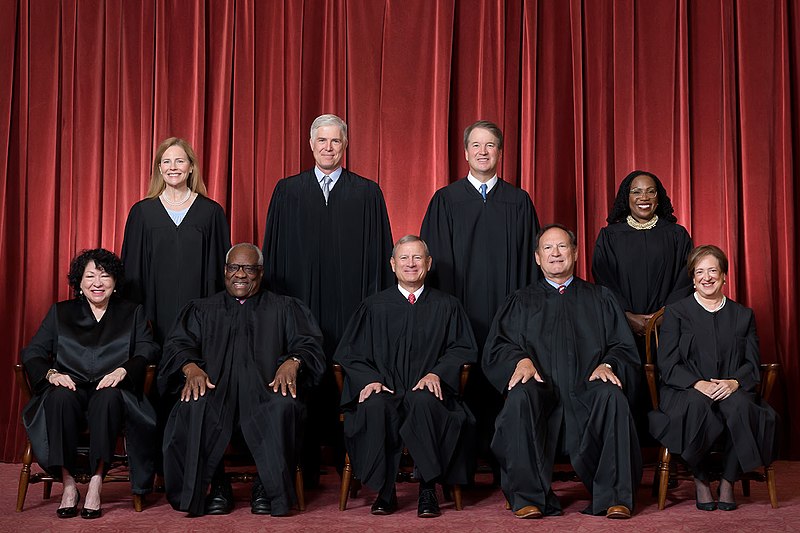
Credit: Fred Schilling, Collection of the Supreme Court of the United States.
The Ramsey County Law Library currently hosts one virtual continuing legal education (CLE) course each month. The presentation scheduled for October 11, 2023 is titled: Nine for Nine Supreme Court Review, 2022-23. Please note that this month’s CLE will be hosted via Zoom starting at 1:00pm.
CLE Details & Registration info:
Sign up for this CLE (one standard credit pending) using the registration link below.
Presented by David Schultz, Distinguished University Professor of Political Science and Legal Studies at Hamline University and a Visiting Professor of Law at the University of Minnesota Law School, and Constitutional law attorney Marshall Tanick of the Twin Cities law firm of MEYER NJUS TANICK.
The Ramsey County Law Library currently hosts one virtual continuing legal education (CLE) course each month via Teams. For September 2023 our presenter will be Naomi Gaines-Young, who is a Post Release Specialist with Minnesota Freedom Fund. She will present on the topic: A Case Study of the Criminalization of Poverty, Culture, and Mental Illness.
Sign up for this CLE (one EOB credit pending) using the registration link below.
CLE Details:
9/13/2023, 12:00 PM – 9/13/2023, 1:00 PM Time zone: (UTC-06:00) Central Time (US & Canada)
Presentation Title: A Case Study of the Criminalization of Poverty, Culture, and Mental Illness
Presentation Description:
We all remember where we were when 9/11 happened. For a young mother by the name of Naomi Gaines, it turned out, 9/11 was the beginning of the end of her sanity. What happens when the unthinkable occurs and a mother ends the life of her child? We often rush to judgement without the compassion to ask why. Naomi will share in this presentation her tragic story of what happens when we ignore mental illness in our community, in our families, and in ourselves. Often people of color are reluctant to seek help, and when we do how the system responds can sometimes exacerbate an already difficult state of mind. Naomi will share how she overcame the odds and is challenging what it means to be given mental health care and support vs. criminalization and punishment. Naomi, now a successful activist, author, and business owner, is spreading her message of awareness. She demonstrates how a transformation of her ‘inner’ world and self-expression through Hip-hop became a catalyst for self-healing and allows Naomi to perform healing work in her community.
Speaker biography:
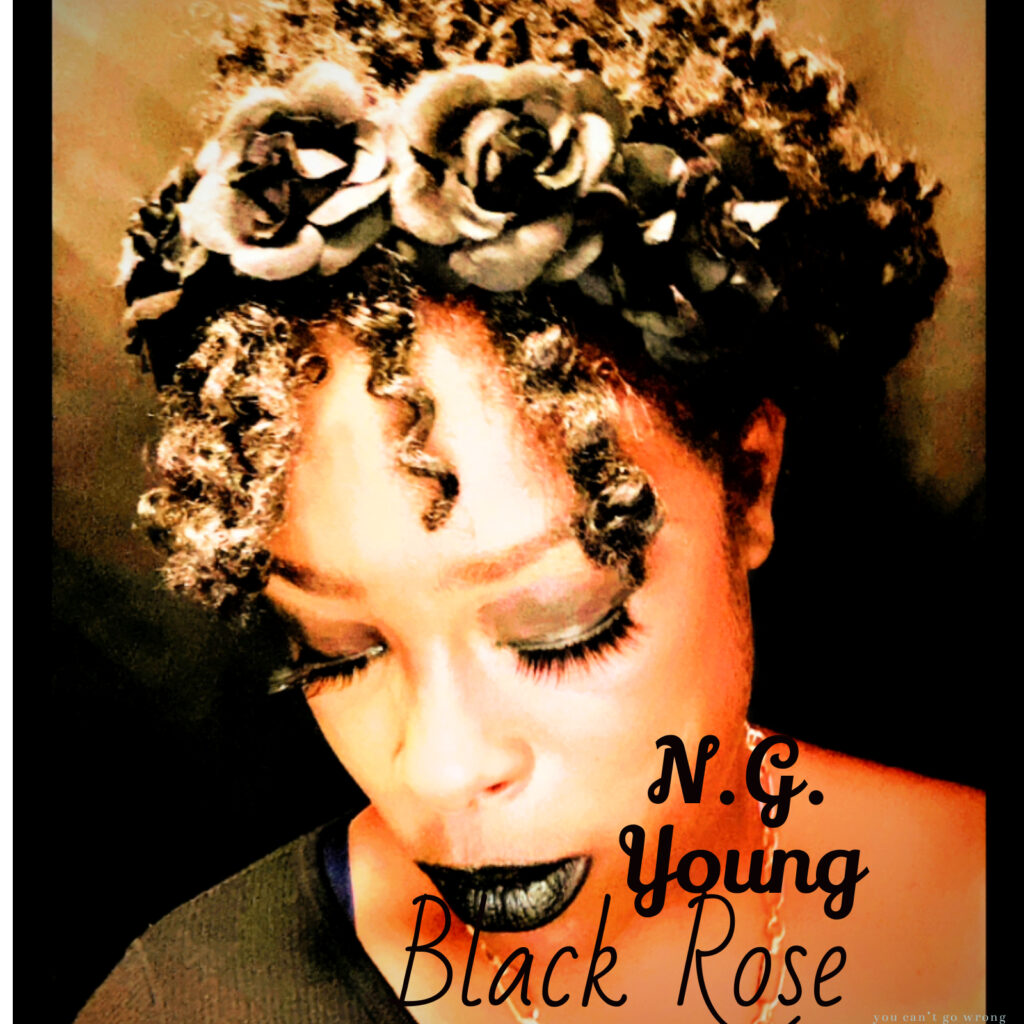
Naomi Gaines-Young, aka N.G. Young, is an independent Hip-hop Artist, Published Author, Motivational Speaker, Mental Health Activist, Organizer and Hip-hop Scholar. She is also the owner of Love Must Be Entertainment, LLC, a Motivational Hip-hop Lessons and Media Company. N.G. lives her life in service to the many who suffer in silence as she once did, especially within the African American community. She seeks to end the cycle of guilt and shame, associated with having both a criminal history and a diagnosed mental illness. N.G. speaks openly and honestly about the loss and pain in her past while moving forward in her future. Her work includes being a keynote speaker at state universities, mental health panels, various non-profits, and annual state conferences. She’s a Certified Peer Support Specialist, and also works as a Post Release Support Specialist and Organizer for Minnesota Freedom Fund that assists individuals recently released from custody and supports those who believe stability in communities depends on the health and well-being of the individuals, families, and institutions within their communities.
If you have questions about the session, please contact the law library at 651-266-8391.